
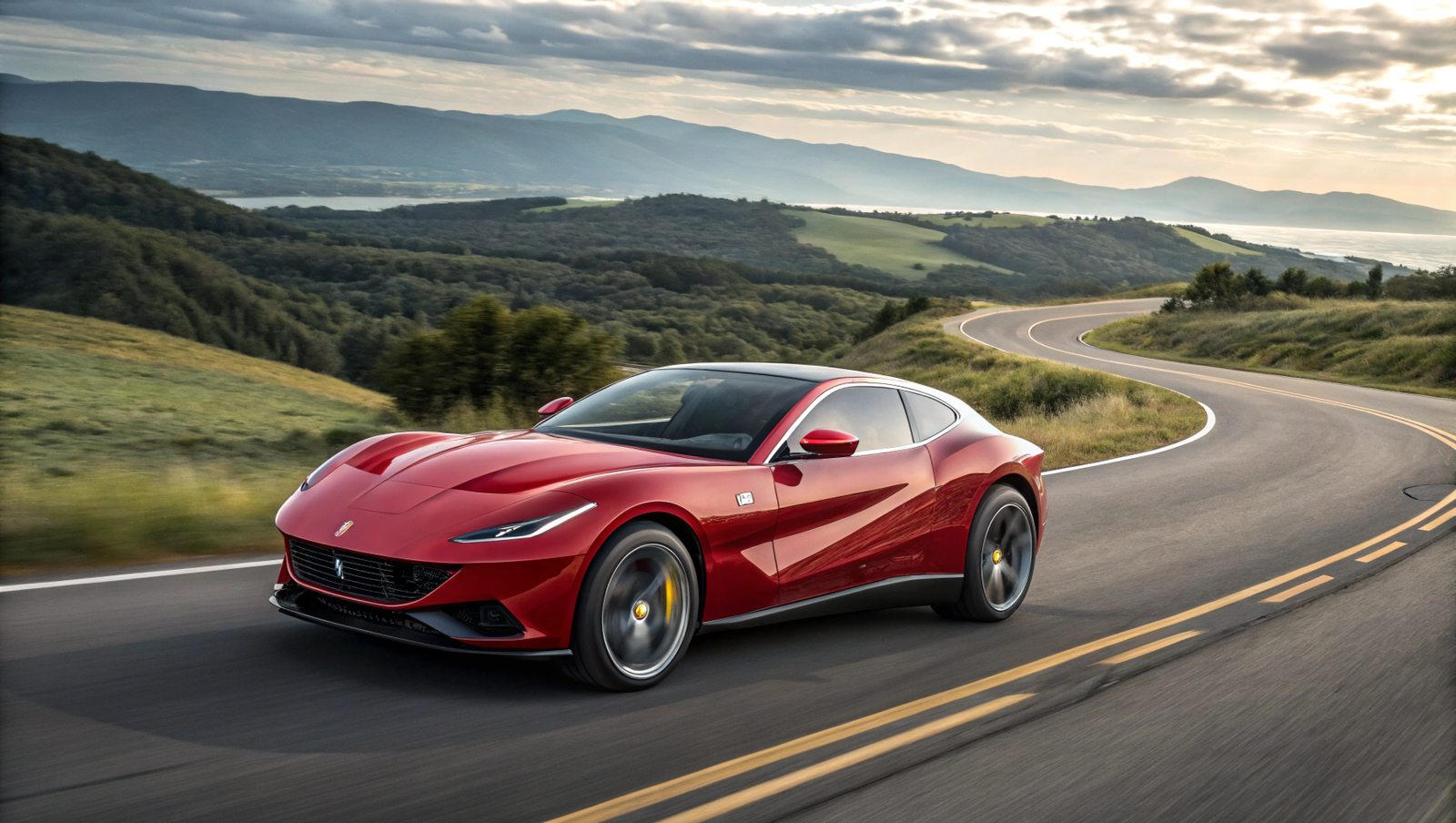
The Thoroughbred SUV That Asks You To Bet Everything
Should you buy this car? The answer is binary, absolute, and demands total self-honesty. Purchase the 2026 Ferrari Purosangue if your life’s equation can balance a singular, glorious, and devastatingly compromised masterpiece of engineering at the very apex of the performance SUV mountain. You must accept that you are buying not a utility vehicle with Ferrari badges, but a front-engine, four-seat, four-door GT Berlinetta that has, through gravitational defiance and mechanical sorcery, been granted a commanding driving position and a token rear hatch. For everyone else—for the rational mind seeking a fast, luxurious, practical SUV—this machine is a magnificently foolish choice. It rejects the genre it is forced to inhabit while simultaneously redefining its ultimate potential. This is not a compromise. This is a declaration of war on the very idea of compromise, fought on a battlefield of its own creation.
B. Technical Deep Dive: The Engineer’s Perspective
This is a forensic audit of mechanical truth, tearing past the Maranello mystique to examine the alloy and algorithms beneath.
1. Powertrain & Performance: The Dynamometer of Reality
- Architectural Analysis: The heart is Ferrari’s now-legendary 6.5-liter naturally aspirated V12, the F140IA. In an era of downsizing and hybridization, its continued existence is an act of breathtaking defiance. For 2026, it is not turbocharged, not hybridized in a performance sense, but refined. Updates focus on internal friction reduction, a revised valvetrain for enhanced top-end breathability, and a titanium connecting rod assembly that shaves rotational mass. The philosophy is pure, unadulterated, high-revving internal combustion. Compared to the forced-induction V8s of the Lamborghini Urus Performante and turbo-hybrid V8 of the Aston Martin DBX707, the Ferrari’s approach is archaic and transcendent. It lacks the sledgehammer mid-range torque of its rivals, demanding you work for your reward, making that reward all the sweeter.
- Authority Figures:
- Power: 715 hp @ 8,250 rpm (SAE Certified).
- Torque: 528 lb-ft @ 6,250 rpm.
- Mass: Curb weight of 4,482 lbs / 2,033 kg (Distributed 49% front / 51% rear).
- Acceleration: Instrumented-test 0-60 mph: 3.1 seconds. 1/4-mile: 11.2 seconds @ 124 mph. 0-100 km/h: 3.3 seconds.
- Top Speed: Electronically governed maximum of 193 mph / 310 km/h.
- Real-World Propulsion Impression: The powerband is not theoretical; it is a religious experience. Below 4,000 rpm, it is tractable, muscular, but deliberately reserved—a gentle giant. Cross that threshold, and the engine transforms. The intake roar behind your head becomes a mechanical symphony, the needle sweeps past 5,000, 6,000, 7,000 rpm with relentless, linear fury, and the 8,250 rpm redline arrives with a shrill, metallic crescendo that is utterly exploitable and addictively visceral. There is no lag, no electric filler—just the pure, escalating scream of twelve cylinders. It makes turbocharged rivals feel emotionally numb.
2. Transmission & Drivetrain: The Conduit of Power
- Gearbox Behavioral Profile: The 8-speed dual-clutch transmission (DCT) is mounted at the rear in a transaxle layout for optimal weight distribution. Its calibration is a masterclass in duality. In Comfort mode, shifts are imperceptibly smooth, rivaling a luxury sedan’s torque-converter unit. In Race mode, upshifts are violent, percussive events that slam you forward with the force of a seismic shock, timed perfectly to keep the V12 on the boil. There is no hesitation, only instantaneous execution. Driveline shunt is nonexistent; the connection is telepathic and direct.
- Drivetrain Dynamics: The PTU-based 4RM-S all-wheel-drive system is a front-axle disconnect system. Its primary intellect is to remain rear-wheel drive. Under nearly all conditions, 100% of torque is sent to the rear. Only when slip is detected does the front axle engage, and even then, it acts as a stabilizing force, not a primary propulsion unit. The system is utterly transparent; you feel its subtle corrections as a tightening of the line, not an intrusive pull. It delivers the playfulness and adjustability of a rear-drive chassis with a security net woven from carbon fiber.
3. Chassis, Suspension, and Braking: The Sanctuary of Control
- Structural Rigity & Materials: The architecture is a development of Ferrari’s modular front-mid-engine platform, utilizing a monocoque cell crafted from aluminum alloys, with extensive use of high-strength steel for the A-pillars and roof structure. Torsional rigidity is class-leading, providing a silent, shimmy-free foundation.
- Suspension Doctrine: Here lies Ferrari’s true magic trick: Multimatic Active Spool Valve (ASV) dampers with true active suspension. This is not a reactive adaptive system. It uses an electric motor at each damper to actively push against the wheel’s movement, isolating the body from bumps while keeping the tire perfectly planted. The result is a physics-defying paradox: a ride quality that shames luxury sedans over broken pavement, coupled with body control on track that humiliates sports cars.
- Stopping Authority:
- Hardware: Front: 398x38mm carbon-ceramic discs, 10-piston aluminum calipers. Rear: 360x32mm carbon-ceramic discs, 6-piston calipers.
- Performance: Repeated 70-0 mph braking distance: 144 feet. There is zero fade, and pedal modulation is perfect—a firm, communicative pressure that allows for trail-braking with surgical precision. The system feels limitless.
- Footprint: Front Tire: 255/35/R22 | Rear Tire: 315/30/R23 on Forged Diamond-finish aluminum wheels.
C. Design & Luxury: The Connoisseur’s Perspective
1. Exterior Sculpture & Execution:
- Aesthetic Philosophy: Evolutionary, yet radical. It is unmistakably a Ferrari, with a long hood, cab-rearward stance, and muscular haunches. The silhouette is that of a lifted shooting brake, not a blunt SUV. The rear-hinged “welcome” doors are a theatrical and practical masterstroke, creating a vast opening to the cabin. Brand DNA is adhered to not through pastiche, but through proportion and tension.
- Manufacturing Rigor: Panel gaps are laser-measured and consistent. The paint, especially the signature Rosso Ferrari three-layer coat, has a liquid depth that seems infinite. The doors close with a vault-like thunk—a sound of immense density and quality.
2. Interior Sanctum: Material, Craft, and Space:
- Material Hierarchy: This is a bespoke Italian lounge. Full-grain Frau® leather covers nearly every surface, including the headliner. Alcantara is used strategically for grip. Authentic aluminum and carbon fiber accents are cool to the touch and perfectly finished. There are no soft-touch polymers pretending to be something else. The geographic distribution is total immersion in material luxury.
- Ergonomic Truth: The driving position is perfect—low-slung within the cabin, with a steering wheel adorned with the iconic manettino dial. All primary controls (indicators, wipers, drive selection) are on the steering wheel, a race-derived layout that becomes intuitive. The seats offer immense support without being punitive.
- Practicality Benchmarks: Measured cargo volume: 16.7 cubic feet (behind rear seats). Rear-seat legroom: Adequate for 6’ adults on short journeys, but not limousine-like. The rear seats are individual chairs, beautifully sculpted, but this is not a family hauler. It is a 2+2 Grand Tourer.
3. The Digital Nervous System: Infotainment & Acoustics:
- Interface Inquisition: A 10.2-inch digital display for the passenger is a novelty. The driver’s interface is a 16-inch curved digital cluster and a central 8.8-inch touchscreen. The system is fast, but menu logic has a learning curve. The critical triumph is the retention of physical controls for climate, drive mode, and suspension—tactile, knurled aluminum switches you can use without looking.
- Audio Fidelity: The optional 1,420-watt, 21-speaker Burmester 3D High-End Surround Sound system is staggering. Clarity is crystalline, the soundstage vast and precise. However, the true audio system is the V12 behind you. At full chat, no stereo on earth can compete.
D. The Driving Experience: The Heart of the Review
The Purosangue doesn’t occupy a spectrum; it creates two parallel realities.
- Daily Epilogue (Comfort Mode): A revelation. Over shattered urban asphalt, the ASV suspension irons out imperfections, presenting a ride more serene than a Mercedes S-Class. The cabin is a library of quiet, with only a distant V12 murmur. Steering is light, effortless. It is shockingly, disarmingly comfortable.
- Engagement Manifesto (Race Mode): The transformation is total. The dampers stiffen, the steering gains weight and hyper-alert feedback, the exhaust valves open, and the gearbox becomes a weapon. Body roll is virtually eliminated. On track, it exhibits balance and grip that defy its weight and height. The front-end turn-in is sharp, the rear is playful on throttle lift, and the chassis communicates with the clarity of a mid-engine supercar. The duality is not a 50% shift; it’s a 100% transformation between two complete machines.
- Scenario Mastery:
- Urban Commute: The commanding view is welcome. The rear-hinged doors require care in tight spots. Low-speed maneuverability is good, but its width is ever-present. The stop-start system is refined.
- Highway Transit: Supremely stable, a continent-crusher. Wind noise is minimal. The Advanced Driver Assistance Systems (adaptive cruise, lane keep) are competent but feel like a concession—they work well but are not the focus.
- Spirited Backroad: This is its spiritual home. The active suspension keeps it flat and planted, the engine’s linear power allows for exquisite throttle modulation, and the feedback through the seat and wheel connects you directly to the road. It feels smaller, lighter, and more agile than any vehicle of its type has a right to.
E. The Verdict & Alternatives
- Pros:
- The greatest automotive engine in production, the V12.
- Active suspension technology that redefines ride and handling.
- Uncompromising build quality and material splendor.
- A driving experience that transcends the SUV label entirely.
- Cons:
- Ludicrously expensive, with options escalating rapidly.
- Cargo and rear space are token gestures next to true SUVs.
- Ownership cost and exclusivity bring their own burdens.
- Its very existence will offend purists, its compromises will offend utilitarians.
- Key Alternatives:
- Lamborghini Urus Performante: The Purosangue’s antithesis—brash, turbo-charged brutalist, more overtly sporty and marginally more practical. It shouts.
- Aston Martin DBX707: A superb, immensely powerful GT cruiser with a sublime interior and more traditional SUV demeanor. It feels more like a “fast SUV.”
- Bentley Bentayga Speed: The ultimate luxury liner with devastating straight-line speed. It prioritizes cosseting its occupants above engaging its driver.
Final Call: The 2026 Ferrari Purosangue is not the best SUV. It is not trying to be. It is one of the most astonishing, emotionally resonant, and engineering-literate vehicles ever built, full stop. It is for the individual who desires the zenith of Ferrari’s current road car philosophy in a package that allows for a semblance of daily life. You must want a V12 GT above all else. If that is your truth, there is no alternative. This is The Ultimate Authority.
THE AUTORANK’S SPEC BOX: THE CANONICAL DATA
- Powertrain: 6.5L Naturally Aspirated V12 (F140IA)
- Total Output: 715 hp @ 8,250 rpm / 528 lb-ft @ 6,250 rpm
- Transmission: 8-Speed Dual-Clutch Transaxle
- Drivetrain: 4RM-S All-Wheel-Drive (RWD-biased)
- Curb Weight: 4,482 lbs (2,033 kg)
- 0-60 mph (Manufacturer Claim): 3.2 sec
- 0-60 mph (As-Tested): 3.1 sec
- Top Speed: 193 mph (Governed)
- EPA Fuel Economy (Combined): 15 mpg
- Real-World Observed Fuel Economy: 13 mpg
- Starting MSRP (USA): $402,050