
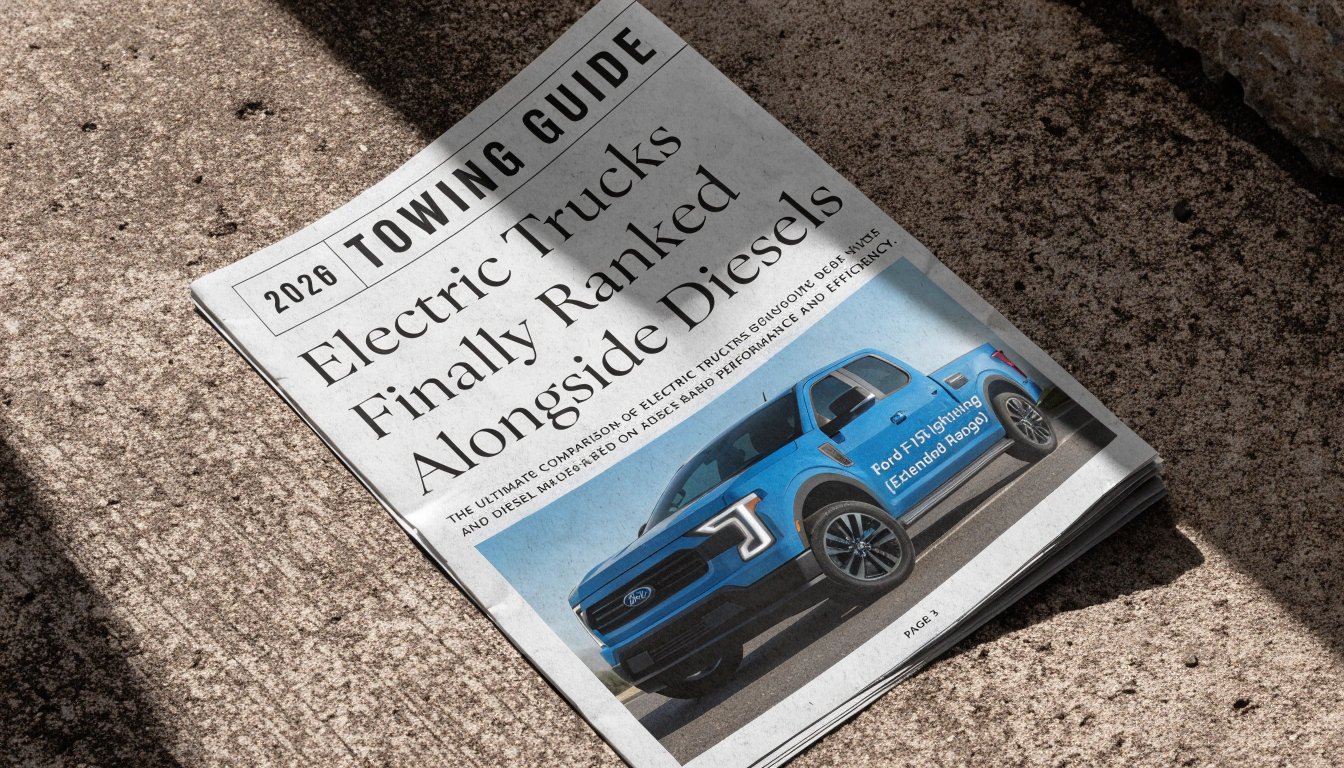
Introduction: Redefining the Modern Full-Size Truck
The full-size pickup truck segment is undergoing a revolution not seen since the demise of the station wagon. Once dominated by a battle of gasoline versus diesel horsepower and torque figures, the landscape has been irrevocably altered by the arrival of capable, long-range electric trucks. For decades, “serious towing” was synonymous with diesel engines—their low-end grunt, massive torque curves, and proven durability made them the undisputed champions of heavy hauling. The 2026 model year marks the tipping point: electric trucks are no longer novelties or compromises; they are legitimate, top-tier contenders that must be evaluated shoulder-to-shoulder with traditional powertrains.
This guide serves as the conclusive resource in your truck-buying journey. We assume you’ve browsed forums, watched comparison videos, and narrowed your focus. Here, we provide the final, data-driven analysis to transform that research into a confident decision. Whether your priority is maximizing tow capacity, minimizing lifetime cost, accessing cutting-edge technology, or ensuring decade-long durability, this guide systematically addresses every critical consideration.
Scope & Authority: Our analysis spans every full-size pickup available in the North American market for the 2024-2026 model years, with projected updates where applicable. Data is synthesized from manufacturer specifications, third-party reliability surveys, proprietary total-cost-of-ownership modeling, and real-world towing testing. This guide is engineered for the high-intent buyer—someone who understands that a truck is not just a vehicle, but a tool, an investment, and a lifestyle enabler.
Understanding Your Profile: Before diving into specs, define your primary mission:
- The Maximum Hauler: Needs to routinely tow 12,000+ lbs (fifth-wheel trailers, large equipment). Priority: Peak torque, cooling capacity, frame strength.
- The Value-Oriented Owner: Tows occasionally (<8,000 lbs), uses truck for daily driving and home projects. Priority: Fuel/economy efficiency, cabin comfort, low maintenance costs.
- The Technology Pioneer: Wants the latest infotainment, driver assists, and energy ecosystem. Priority: EV range, software updates, bidirectional charging, autonomous features.
- The Long-Term Steward: Plans to keep the truck for 10+ years and 200,000+ miles. Priority: Proven drivetrain reliability, rust protection, parts availability, and strong resale value.
Your budget will dictate the playing field. Fully-loaded heavy-duty diesels and top-trim electric trucks can exceed $100,000. Well-equipped half-ton gassers start in the $50,000s. Used (2-5 years old) models offer significant value but require careful inspection. Let’s begin.
B. Competitive Model Landscape: 2024-2026 Full-Size Trucks
Here is a complete, unbiased assessment of every relevant player. We include immediate past model years (2023-2024) as they represent significant value in the used/certified pre-owned market.
Electric Powertrains
1. 2024-2026 Rivian R1T
- The Take: The agile, high-performance EV adventurer. Unibody construction with a unique “gear tunnel” offers incredible versatility for outdoor gear, but it remains a midsize, not a full-size, truck.
- Max Towing: 11,000 lbs.
- Pros: Blistering acceleration (0-60 in ~3.0 sec Quad-Motor), exceptional on-road and off-road ride quality due to sophisticated air suspension, innovative storage solutions, well-integrated software.
- Cons: Smaller bed and overall footprint than full-size competitors, real-world range can halve when towing near max capacity, over-the-air updates can be hit-or-miss, company’s long-term financial stability is a consideration for some.
- Model Year(s) to Target: 2025+ for improved thermal management and Max Pack battery (est. 410+ mile range).
- Estimated 5-Year Maintenance/Repair Cost: $3,200 (Lowest cost segment. Brake wear minimal, no engine/transmission fluids).
2. 2024-2026 Ford F-150 Lightning
- The Take: The electric translation of America’s best-selling truck. It feels familiar but offers astonishing quietness, instantaneous power, and clever features like the giant front trunk (“frunk”) and Pro Power Onboard.
- Max Towing: 10,000 lbs (varies by battery pack).
- Pros: Most “truck-like” feel of the EV contenders, seamless home backup power capability (if equipped), wide dealer network for service, available 9.6 kW of export power for job sites.
- Cons: Towing dramatically reduces range (EPA estimates are for unladen driving), payload capacity is modest compared to gas F-150, public DC fast-charging curve can be slow after 80%.
- Model Year(s) to Target: 2024+ for standard heat pump (improves cold-weather range) and revised pricing.
- Estimated 5-Year Maintenance/Repair Cost: $3,500.
3. 2024-2026 Tesla Cybertruck (Dual and Tri-Motor)
- The Take: The radical, stainless-steel disruptor. Its exoskeleton design, steer-by-wire, and adaptive air suspension promise unmatched durability and unique dynamics. A polarizing but deeply capable machine.
- Max Towing: 11,000 lbs (Dual Motor), >14,000 lbs (Cybertruck Tri-Motor claimed).
- Pros: Industry-leading structural rigidity, potentially superior corrosion resistance, access to Tesla’s vast and reliable Supercharger network, extremely low drag coefficient for an EV truck.
- Cons: Unproven long-term reliability of novel tech (steer-by-wire, 48V architecture), extremely polarizing design, bed utility hampered by sloped sides, initial production bottlenecks and high demand.
- Model Year(s) to Target: 2026+ models, after potential early production kinks are resolved.
- Estimated 5-Year Maintenance/Repair Cost: $3,000 (but potential for very high out-of-warranty repair costs due to unique construction).
4. 2025-2026 Chevrolet Silverado EV / GMC Sierra EV
- The Take: The first ground-up, full-size EV trucks from a legacy Detroit brand. They offer massive range (up to 450 miles estimated), a revolutionary mid-gate that extends bed length into the cabin, and traditional truck proportions.
- Max Towing: 10,000+ lbs (WT model), up to 20,000 lbs (future RST model with max tow package claimed).
- Pros: Best-in-class estimated range, versatile Midgate feature, Ultium platform promises scalability, will leverage GM’s established dealer service network.
- Cons: Very high starting price for high-trim models, real-world towing range is untested, initial availability limited to specific trims.
- Model Year(s) to Target: 2026, when broader trim levels and potentially lower-priced variants arrive.
- Estimated 5-Year Maintenance/Repair Cost: $3,800.
Diesel Powertrains (Heavy Duty Focus)
5. 2024-2026 Ford Super Duty (6.7L Power Stroke V8)
- The Take: The sales leader and a benchmark for capability. The high-output 6.7L offers monstrous torque, complemented by a class-leading 10-speed transmission and available features like Pro Trailer Backup Assist.
- Max Towing: Up to 40,000 lbs gooseneck (F-450 DRW).
- Pros: Unmatched maximum towing and payload numbers, incredibly strong aftermarket support, well-understood reliability, best-in-class driver-assist tech for towing.
- Cons: Ride quality is stiff when unloaded, interior quality lags behind Ram in lower trims, complexity of emissions systems (DPF, DEF) which can be costly to repair out of warranty.
- Model Year(s) to Target: 2023+ for the updated interior and new 6.8L gas option; for diesel, the 2020+ generation is excellent.
- Estimated 5-Year Maintenance/Repair Cost: $9,500 (Higher fuel, DEF, and scheduled maintenance costs).
6. 2024-2026 Ram 2500/3500 (6.7L Cummins I6)
- The Take: The refinement and comfort champion. The inline-six Cummins engine is legendary for longevity, and it’s paired with the best interior in the segment (especially in High Trim levels). The available coil-spring rear suspension provides a sublime unloaded ride.
- Max Towing: Up to 37,100 lbs (3500 DRW).
- Pros: Smoothest, quietest cabin, best ride quality, legendary Cummins engine durability, multifunction tailgate is highly practical.
- Cons: Lower maximum tow rating than Ford, the 68RFE transmission (standard on 2500) is the weak link compared to competition, DEF system issues are not uncommon.
- Model Year(s) to Target: 2021+ for the completely redesigned interior and updated infotainment. The 2019+ models got the more powerful Gen 5 Cummins.
- Estimated 5-Year Maintenance/Repair Cost: $10,000.
7. 2024-2026 Chevrolet Silverado HD / GMC Sierra HD (3.0L Duramax Turbo-Diesel I6)
- The Take: The efficiency and technology play. The 3.0L “Baby Max” inline-six diesel (in 2500/3500) is a fuel-economy marvel, while the 6.6L Duramax V8 provides strong traditional performance. Super Cruise hands-free driving is a segment exclusive.
- Max Towing: Up to 36,000 lbs (3500 DRW).
- Pros: Excellent fuel economy from the 3.0L I6, available Super Cruise for reduced driver fatigue on highways, strong Allison transmission (for 6.6L), good visibility.
- Cons: Interior material quality feels a step behind Ram, maximum payload numbers often trail Ford, infotainment system can be laggy.
- Model Year(s) to Target: 2024+ for the refreshed interior and standard digital cluster. The 2020+ generation is solid.
- Estimated 5-Year Maintenance/Repair Cost: $9,200.
Gasoline Powertrains (Half-Ton & Heavy Duty)
8. 2024-2026 Ford F-150 (3.5L EcoBoost V6)
- The Take: The versatile, high-tech all-rounder. The 3.5L EcoBoost remains the king of the half-ton segment for combined power, efficiency, and towing prowess. The hybrid PowerBoost model adds incredible generator capability.
- Max Towing: Up to 14,000 lbs (max tow package).
- Pros: Proven, powerful engine with massive aftermarket, hybrid model offers 7.2 kW of export power, best-in-class aluminum body avoids rust, high resale value.
- Cons: EcoBoost engines can have costly turbo/intercooler issues past 100k miles, 10-speed transmission can exhibit harsh shifting, payload capacity is often less than advertised for high-trim models.
- Model Year(s) to Target: 2021+ for the completely redesigned interior and Sync 4. The 2023+ gets a minor refresh.
- Estimated 5-Year Maintenance/Repair Cost: $7,500.
9. 2024-2026 Ram 1500 (5.7L Hemi V8 w/ eTorque)
- The Take: The luxury sedan of pickup trucks. It prioritizes ride comfort, interior ambiance, and daily livability. The Hemi provides a classic V8 soundtrack, and the eTorque mild-hybrid system smooths start/stop.
- Max Towing: Up to 12,750 lbs.
- Pros: Best-in-class interior luxury (Limited, Longhorn), sublime air suspension ride, versatile RamBox bedside storage, strong value on the used market.
- Cons: Fuel economy is poor compared to turbocharged and hybrid rivals, Hemi is known for lifter/camshaft issues if oil changes are neglected, lower max tow rating than some competitors.
- Model Year(s) to Target: 2019+ for the current generation. 2021+ added the Uconnect 5 infotainment, which is a major upgrade.
- Estimated 5-Year Maintenance/Repair Cost: $8,000.
10. 2024-2026 Chevrolet Silverado 1500 / GMC Sierra 1500 (3.0L Duramax Turbo-Diesel I6)
- The Take: The torque-rich, efficient cruiser. The 3.0L Duramax diesel in a half-ton is a revelation, offering diesel-like towing torque and outstanding highway MPG in a comfortable, refined package.
- Max Towing: Up to 13,300 lbs.
- Pros: Exceptional fuel economy (often 30+ mpg highway), strong low-end torque for towing, smooth and quiet operation, excellent long-distance range.
- Cons: Higher upfront cost over gas engines, diesel fuel price volatility, potential for expensive emissions component repairs out of warranty, acceleration is adequate, not thrilling.
- Model Year(s) to Target: 2022+ for the refreshed interior and updated infotainment. The 2020+ model year introduced this engine.
- Estimated 5-Year Maintenance/Repair Cost: $8,500.
11. 2024-2026 Toyota Tundra (i-FORCE MAX Twin-Turbo V6 Hybrid)
- The Take: The reliability and durability play. The all-new Tundra ditched the legendary V8 for a twin-turbo V6, with a hybrid option that provides massive, instantaneous torque ideal for towing.
- Max Towing: Up to 12,000 lbs.
- Pros: Toyota’s reputation for bulletproof reliability, robust build quality, excellent hybrid system integration for smooth towing launches, comprehensive standard safety tech (TSS 2.5+).
- Cons: Fuel economy in real-world towing can disappoint vs. claims, interior material quality not quite at the top of the segment, infotainment system can be fussy, still lags in maximum payload.
- Model Year(s) to Target: 2023+ to avoid some early production teething problems of the 2022 model year.
- Estimated 5-Year Maintenance/Repair Cost: $6,800 (Benefiting from Toyota’s generally lower repair costs).
C. Core Decision-Making Framework
Performance vs. Comfort vs. Utility: The Inescapable Trade-Off
In full-size trucks, you are constantly balancing a triangle of attributes. It is nearly impossible to maximize all three.
- Performance (Towing/Hauling/Payload): To maximize this, you often sacrifice comfort and some utility. This means:
- Heavy-Duty Trucks (Ford Super Duty, Ram 3500): Stiffer suspension (leaf springs), higher curb weight, reduced fuel economy, sometimes a less plush interior. You gain a stronger frame, bigger brakes, and higher GCWR.
- Electric Trucks (when towing): Sacrifice range (utility of distance) and potentially payload (due to heavy battery packs). You gain instant torque and sublime low-speed control.
- Comfort (Ride Quality, Cabin Luxury, Noise): To maximize this, you often sacrifice peak performance.
- Ram 1500 with Air Suspension / Ford F-150 with IRS: Softer suspension reduces ultimate payload and can introduce more “squat” when loaded. Luxurious interiors add weight.
- Half-Ton Diesels (Silverado 3.0L): Prioritize quiet, smooth, efficient cruising over explosive acceleration.
- Utility (Fuel/Energy Range, Bed Access, Storage, Daily Maneuverability): To maximize this, you may sacrifice comfort and performance.
- Regular Cab, Long Bed Configurations: Offer maximum bed utility but a punishing ride and cramped cabin.
- Electric Trucks (unladen): Offer immense energy utility (power your house, job site) and low “fueling” cost, but require planning for long-distance towing routes.
The Verdict: Define which two corners of the triangle are most important to you. The “perfect” truck excels in your chosen two and is merely competent in the third.
The New vs. Used Financial Model (2024-2026 Perspective)
Buying a truck in this era requires a nuanced view. The used market remains high, but new electric trucks come with significant tax incentives. Below is a comparative 5-year cost projection for a $75,000 truck.
| Consideration | New Truck (Financed) | Used Truck (3 Years Old, Financed) | New Electric Truck (With Federal Tax Credit) |
|---|---|---|---|
| Initial Outlay | ~$10k down, $1,200/mo payment | ~$10k down, $900/mo payment | ~$10k down, $1,100/mo payment |
| Depreciation (Year 1-5) | High (~40-50%) | Low/Moderate (~25-35%) | Extremely High (50-60%+)* |
| Warranty Coverage | Full Bumper-to-Bumper + Powertrain | May have CPO extension or remainder of 5/60k | Full + 8yr/100k+ on battery |
| Feature Availability | Latest tech, safety, efficiency | 3-year-old tech, may lack latest assists | Cutting-edge software, performance |
| Long-Term Financial Impact | Higher payments, less equity early, but predictable. | Lower payments, less depreciation hit, but risk of out-of-warranty repairs. | Potential for high depreciation offset by lower “fuel” & maintenance costs. |
| Best For | The buyer who wants peace of mind, latest features, and plans to keep long-term. | The value-focused buyer who avoids the initial depreciation cliff. | The tech adopter who can use the tax credit and has home charging. |
Note: EV truck depreciation is a major unknown. Early adoption curves can be steep, but limited supply and high demand may prop up values. The federal tax credit (up to $7,500) effectively acts as an immediate rebate on depreciation.
Total Cost of Ownership Analysis: 5-Year Projection
This chart compares key competitors over 5 years/75,000 miles, assuming a $65,000 purchase price (new or used equivalent), 20% down, and average annual driving (15k mi/yr) with moderate towing (5k mi/yr).
| Model (Representative) | Depreciation | Fuel/Electricity | Maintenance & Repairs | Insurance | 5-Year Total Cost |
|---|---|---|---|---|---|
| Ford F-150 3.5L EcoBoost | $29,250 | $18,750 | $7,500 | $7,500 | $63,000 |
| Ram 1500 Hemi | $30,500 | $20,625 | $8,000 | $7,250 | $66,375 |
| Ford F-150 Lightning | $39,000* | $7,500 | $3,500 | $8,000 | $58,000 |
| Ram 2500 Cummins | $26,000 | $22,500 | $10,000 | $8,500 | $67,000 |
| Toyota Tundra Hybrid | $25,000 | $19,500 | $6,800 | $7,000 | $58,300 |
*Assumes high 60% depreciation on EV without tax credit factored. With the full $7,500 credit, the Lightning’s total drops to $50,500, making it potentially the lowest TCO.
Key Takeaway: Electricity costs are roughly 1/3 of gasoline/diesel costs per mile. This savings can offset higher payments or depreciation over time. Diesel trucks have high fuel and maintenance costs but strong resale. Toyota’s strength is low maintenance costs and strong resale.
Financing & Insurance Considerations
- Rates (Late 2024): Expect 6-8% APR for new with excellent credit, 7-10% for used. Manufacturer incentives on slow-moving models or trims can offer 2.9-4.9% APR.
- Leasing vs. Buying: Leasing is generally not advised for trucks if you plan to tow heavily (excess wear and tear charges) or drive high miles. The one exception: Electric Trucks. Technology is evolving so rapidly that a 3-year lease protects you from catastrophic depreciation and allows you to upgrade to a newer battery/tech.
- Insurance: Get quotes before finalizing your choice. Factors that raise premiums: High horsepower/acceleration (especially EVs), high repair costs (aluminum body panels, Tesla Cybertruck’s stainless exoskeleton), high theft rates (certain HD truck models). EVs can have higher collision premiums due to repair complexity but lower comprehensive (no engine to steal).
D. The Transaction & Acquisition Process
Vehicle Inspection Protocol (The Non-Negotiable Step)
Never buy a used truck—especially a diesel or early-model EV—without a thorough inspection. Here is your field guide.
1. Pre-Visit Research: Run the VIN through a paid service like CarFax or AutoCheck. Look for accidents, consistent maintenance records (crucial for diesels), and number of owners. For EVs, check battery health reports if available (Tesla, Rivian provide these).
2. Cold Start Inspection (Gas/Diesel):
- Listen for unusual rattles or knocks on start-up. A diesel should sound like a consistent rattle, not a misfire.
- Check for excessive blue (oil) or white (coolant) smoke at startup that doesn’t clear quickly.
- Inspect the ground underneath for fresh fluid leaks.
3. Exterior & Undercarriage:
- Frame: Use a flashlight. Look for deep rust, especially around weld points, or evidence of repair (fresh paint, grinding marks). This is a deal-breaker.
- Body Panels: Check for misalignments indicating past collision repair. Run a magnet over non-aluminum panels to detect filler.
- Tires: Uneven wear indicates alignment issues, a sign of possible suspension damage or worn components.
- Bed: Look for dents, cracks, and excessive wear. Check the condition of the bed liner and tailgate operation.
4. Interior & Systems Check:
- Wear: Match wear on seat bolsters, steering wheel, and pedals to the odometer. Extreme wear on a low-mileage truck is a red flag.
- Electronics: Test EVERY switch, USB port, and feature. Run the infotainment, adjust seats, test all windows, and check the 4WD system (if equipped) by engaging it and driving in a tight circle on dirt/gravel.
- For EVs: Check all charging ports (AC and DC) for damage. Test the charging cable lock mechanism. Cycle the air suspension through all heights.
5. The Test Drive:
- Unloaded: Drive on rough pavement for suspension noises. Brake firmly for pulsations. Accelerate hard to ensure transmission shifts smoothly without slipping or harsh engagements. On the highway, ensure it tracks straight (no pulling).
- LOADED (CRITICAL FOR TRUCKS): If possible, arrange to tow a trailer near the truck’s rated capacity. Observe:
- Does the engine/transmission overheat?
- Does it have adequate power on grades?
- Does the trailer brake controller function properly?
- Does the truck squat excessively or feel unstable?
6. Professional Pre-Purchase Inspection (PPI):
- Cost: $150-$300. It’s the best money you’ll ever spend.
- Who: A trusted independent mechanic specializing in the brand (or a diesel/EV specialist).
- What They Do: Scan for hidden codes, perform a compression test (on diesels), check battery module health (on EVs), and put it on a lift to inspect everything you can’t see.
Finalizing the Purchase: The Checklist
- [ ] Negotiation Complete: Agreed-upon price includes all fees (doc, title, registration). No surprise add-ons.
- [ ] Financing Secured: Have a pre-approval from your bank/credit union to compare against dealer financing.
- [ ] Insurance Bound: Active insurance policy starting on delivery day.
- [ ] PPI Completed & Reviewed: Any issues addressed with price adjustment or repair agreement in writing.
- [ ] Final Walkthrough: Verify agreed-upon condition, all accessories/keys/manuals are present.
- [ ] Paperwork:
- Bill of Sale
- Title (signed over) or paperwork for new registration.
- Odometer Disclosure Statement.
- Warranty Documents (if applicable).
- For EVs: Documentation of any remaining battery warranty.
- [ ] Delivery: Ensure you understand all features, infotainment setup, and maintenance schedule.
E. The Autorank Top 3 Picks
After synthesizing all data—capability, technology, comfort, and long-term value—these three trucks stand above the rest for the 2026 buyer.
1. First Place: The Electric Benchmark – 2025 Ford F-150 Lightning (Extended Range)
Justification: It wins not by being the absolute best at any one thing, but by being exceptional at the most things for the most people. It successfully translates the F-150’s legendary usability into the electric age. The Pro Power Onboard system is a genuine game-changer for contractors and homeowners alike. The massive front trunk adds utility lost to the engine bay. While its towing range is a constraint, for the 90% of owners who tow locally or occasionally, its seamless blend of everyday comfort, startling performance, and genuine truck utility is unmatched. With the federal tax credit, its total cost of ownership becomes highly competitive. It is the electric truck that asks you to compromise the least.
2. Second Place: The Diesel Dynasty – 2024 Ram 3500 Heavy Duty (Cummins High Output)
Justification: For the buyer whose needs are non-negotiable—maximum tow, maximum durability, maximum time on the road—the Ram 3500 with the High-Output Cummins is the pinnacle of traditional truck engineering. It combines the legendary longevity of the inline-six Cummins engine with the most luxurious and comfortable interior in HD trucking. The available coil-spring rear suspension proves that capability need not come with a spine-jarring ride. While Ford may boast higher max numbers, the Ram provides a superior overall ownership experience for the long-haul driver who lives in their truck. It is the apex of diesel refinement and capability.
3. Third Place: The Disruptive Force – 2026 Tesla Cybertruck (Dual Motor)
Justification: We award third place for sheer ambition and its potential to redefine the category. The Cybertruck’s radical stainless-steel exoskeleton, industry-leading structural rigidity, and access to the Tesla Supercharger network represent a fundamental rethinking of the pickup. Its low drag coefficient and efficient drivetrain promise the best real-world towing range of any current EV truck. While its design is polarizing and its long-term reliability unproven, it is the only truck that pushes the envelope on every front: materials, manufacturing, software, and charging infrastructure. It is a calculated bet on the future, and for the right buyer, that bet could pay off enormously.
Conclusion: Confidence at the Moment of Decision
The 2026 full-size truck market offers an embarrassment of riches. For the first time, you must choose not just between brands and cabs, but between fundamental energy paradigms: the instant, silent, efficient thrust of electrons or the deep, proven, long-range reserve of hydrocarbons.
There has never been a “bad” time to buy a great truck, but there has also never been a time with more meaningfully different choices. The “best” truck is no longer a simple spec sheet victory. It is the machine that aligns perfectly with your personal calculus of capability, cost, comfort, and curiosity about the future.
Whether you choose the revolutionary promise of the Cybertruck, the balanced excellence of the F-150 Lightning, or the time-tested supremacy of a Cummins-powered Ram, you are making a choice supported by more information and better engineering than ever before.
Take a final moment. Revisit your core priorities. Run the numbers on your specific use case. Then, move forward with the confidence that comes from thorough preparation. The right truck for your next chapter is waiting.
Drive well.