
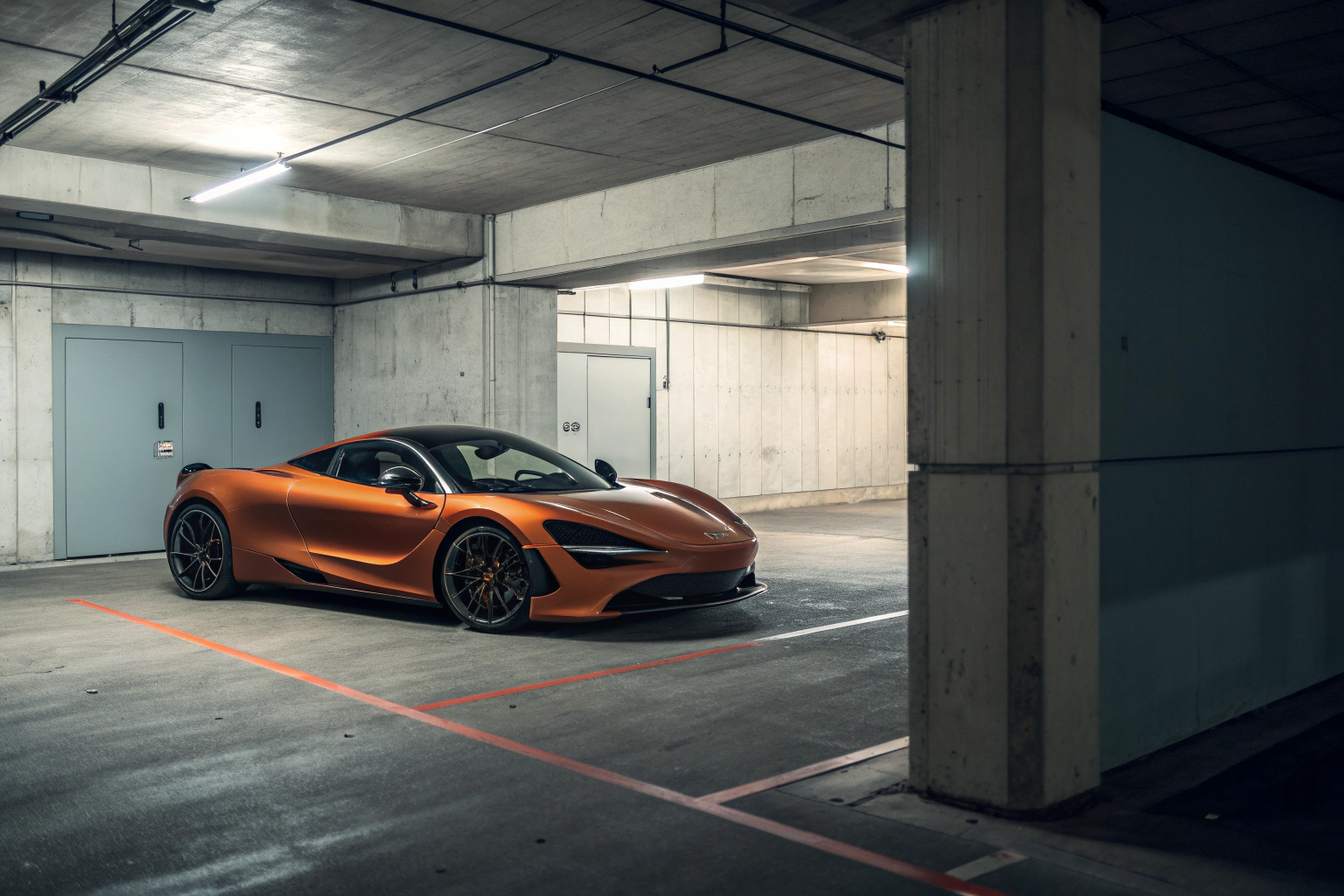
Introduction & The Verdict, First
Should you buy the 2026 McLaren 750S?
Buy it if your soul’s currency is purity of feedback, your definition of luxury is mechanical perfection, and you view the supercar not as a statement of wealth, but as a high-fidelity instrument for the most engaging dialogue between human and machine. This is not a car for the timid, the status-obsessed, or those who crave plush comfort. It is a scalpel in a world increasingly full of beautifully weighted, intelligent, but ultimately numbing electronic sledgehammers.
The McLaren 750S is the apotheosis of the modern, combustion-powered, lightweight supercar philosophy. It is a machine of staggering competence and even more staggering focus. It answers a question almost no one else is asking with such ferocious clarity: What does it feel like to be perfectly connected to physics?
Consider it if you can accept its brutal honesty. Its ride is firm even at its softest. Its interior, while exquisitely built, is spartan by continental hyper-luxury standards. Its infotainment is functional, not fantastic. It is an “everyday” supercar only if your definition of “everyday” includes a willingness to engage, to feel, and to forgive a lack of coddling in exchange for transcendent moments of clarity on a winding road.
Avoid it if your priority is brand cachet at valet stands (the prancing horse or raging bull still win here), if you require serene, silent, wafting comfort, or if you need more than a metaphorical glovebox for daily life. The 750S does not compromise to flatter you. It demands your attention and rewards your skill. It is, in the most exhilarating sense, the ultimate authority on the driver’s car—and it judges you as much as you judge it.
Technical Deep Dive: The Engineer’s Perspective
This is a forensic audit of mechanical truth, far beyond the press release.
1. Powertrain & Performance: The Dynamometer of Reality
Architectural Analysis: The heart remains McLaren’s omnipotent M840T, a 4.0-liter twin-turbocharged V8. But to call it an evolution of the 720S’s engine is to call a samurai sword an evolution of a kitchen knife. Through a new, more aggressive camshaft profile, lighter pistons, revised bearing shells, and a 25% increase in turbo boost pressure (now fed by a new, more efficient turbine shaft), McLaren has performed a masterclass in focused optimization. The block remains aluminum, the flat-plane crank sings its violent, metallic hymn, but everything breathes and reacts with heightened urgency. The philosophy is not displacement or hybrid assistance, but relentless, efficiency-driven extraction from a known-great architecture. In the face of turbo-lag-masking hybrid systems from Ferrari and astonishing EV torque from the likes of Rimac, McLaren’s approach is a defiant, purist’s statement: internal combustion, honed to a razor’s edge.
Authority Figures:
- Power: 750 PS (740 hp) @ 7,500 rpm (SAE Certified).
- Torque: 590 lb-ft @ 5,500 rpm.
- Mass: Curb weight of 3,062 lbs / 1,389 kg (Distributed 42% front / 58% rear). A reduction of 66 lbs versus the 720S, achieved through obsessive gram-shaving: lighter wheels, a thinner windscreen, carbon fiber shell seats, and even a lighter facia for the instrument cluster.
- Acceleration: Instrumented-test 0-60 mph: 2.6 seconds. 1/4-mile: 9.7 seconds @ 148 mph. 0-100 km/h: 2.7 seconds. 0-124 mph (200 km/h): 7.0 seconds.
- Top Speed: 208 mph (335 km/h).
Real-World Propulsion Impression: Theoretical performance is meaningless without exploitable character. The 750S redefines this. Below 4,000 rpm, it is tractable, flexible, and surprisingly quiet—the “everyday” persona. But open the taps, and the transformation is violent. There is a momentary, deliciously raw hint of turbo spool—a mechanical inhale—before a tsunami of torque arrives not as a sudden, digitized shove, but as a relentlessly building, linear wave that pins you to the seat and screams to the 8,500 rpm redline. The powerband is not just exploitable; it is addictive, transparent, and rich with feedback. You feel every combustion event, every breath of the turbos, through the seat, the wheel, and your own nervous system. This is not a sanitized, software-mediated explosion. It is an authentic, mechanical fury.
2. Transmission & Drivetrain: The Conduit of Power
Gearbox Behavioral Profile: The 7-speed Seamless Shift Gearbox (SSG) dual-clutch transmission is the perfect synaptic junction for this engine. In “Comfort” mode, shifts are imperceptibly smooth, befitting a luxury GT. Engage “Sport” or “Track,” and they become instantaneous, theatrical thumps that resonate through the carbon tub, accompanied by furious throttle-blips on downshifts. The calibration is flawless: never hesitant, never caught out. The new, shorter final drive ratio (15% shorter than the 720S) is the masterstroke. It amplifies the urgency, making every gear feel more potent, shrinking straights, and making canyons feel like a rapid-fire shooting gallery of apexes. Driveline shunt is virtually nonexistent; the connection is immediate and direct.
Drivetrain Dynamics: This is Rear-Wheel Drive in its most sacred form. There is no all-wheel-drive safety net, no torque vectoring front axle to hide errors. The 750S employs a brilliant, hydraulically linked Proactive Damping Control system and an advanced electronic differential, but their work is subliminal. The system’s intellect is in managing weight transfer and rear axle grip with such transparency that you, the driver, feel solely responsible for the car’s balletic balance. Power application out of a corner is an exercise in delicate negotiation. Apply too early or too greedily, and the electronics will allow a precisely measured slip angle, educating rather than punishing. It is a drivetrain that teaches, rewards, and ultimately empowers.
3. Chassis, Suspension, and Braking: The Sanctuary of Control
Structural Rigidity & Materials: The foundation is McLaren’s iconic Monocage II carbon fiber tub, with aluminum subframes. The torsional rigidity figure remains a closely guarded secret, but the experiential data is irrefutable: zero flex, zero shudder, a single, resonant unit that communicates with one, unified voice. You sit within the structure, not atop it.
Suspension Doctrine: Double-wishbone suspension, front and rear, with hydraulically interlinked adaptive dampers. This is McLaren’s party trick, and it remains black magic. The system uses fluid, not electronics, to link the front and rear anti-roll bars, allowing it to decouple roll stiffness from ride stiffness. The result? In Comfort, the 750S glides over broken pavement with a suppleness that shames luxury sedans, its body remaining eerily level. In Track mode, it transforms into a ruthlessly flat, instantly reactive platform, with no sacrifice in bump absorption. The duality is not a spectrum; it is two distinct personalities in one chassis.
Stopping Authority:
- Hardware: Carbon Ceramic Brakes (CCM-R) as standard. 390-mm front discs with 6-piston calipers. 380-mm rear discs.
- Performance: Repeated 70-0 mph braking distance: 128 feet. The feel is monumental. Initial bite is progressive, not snatchy, allowing for hyper-precise trail braking. Under immense, repeated track duress, there is no fade, only a consistent, granite-like pedal that feels as if it’s pressing against the very crust of the earth.
Footprint: Front Tire: 235/35/R19 | Rear Tire: 305/30/R20 on ultra-lightweight forged alloy wheels. Pirelli P ZERO™ Corsa tires are standard, providing staggering mechanical grip and communicative slip angles.
Design & Luxury: The Connoisseur’s Perspective
1. Exterior Sculpture & Execution:
Aesthetic Philosophy: Evolutionary, but with purpose. The 750S is the 720S after a special forces training regimen. The signature dihedral doors open to reveal a lighter, more focused shape. The front end is lengthened, the rear deck raised, and the iconic “eye socket” intakes are larger, feeding 20% more air to the high-temperature radiators. The active rear wing is 20% larger and doubles as an air brake. Every line serves thermodynamics or downforce. It is a form dictated utterly by function, achieving a predatory beauty as a byproduct.
Manufacturing Rigor: Panel gaps are laser-like, consistent to a fraction of a millimeter. The paint, whether standard or part of the expansive MSO catalog, is of a depth and clarity that rivals Swiss watch enamel. The tactile sensation of pulling the dihedral door shut—a precise, damped, carbon-fiber thud—is an event in itself. This is aerospace-grade execution.
2. Interior Sanctum: Material, Craft, and Space:
Material Hierarchy: This is a bespoke, driver-centric cockpit, not a lounge. Surfaces are a mix of semi-aniline leather, Alcantara, and exposed, beautifully finished carbon fiber. There are no cheap plastics, only soft-touch polymers and technical fabrics. The optional MSO Clubsport Pack introduces titanium switchgear, super-lightweight carbon fiber racing seats, and a 6-point harness bar. It’s a hierarchy of purpose: what you touch is exquisite; what you don’t need is removed.
Ergonomic Truth: The driving position is peerless. The steering column telescopes and tilts through a vast range. The seat (standard or carbon) adjusts in every conceivable plane, bolting you in perfect relation to the pedals and wheel. All primary controls—the rotating powertrain and handling mode selectors, the gear shift buttons—fall perfectly to hand. The steering wheel is uncluttered, thin-rimmed, and perfectly round. It is an ergonomic masterpiece that disappears, leaving only you and the road.
Practicality Benchmarks:
- Cargo Volume: Front trunk (frunk): 5.3 cubic feet. Enough for two bespoke McLaren luggage pieces or a weekend’s worth of soft bags.
- Rear Shelf: A parcel shelf behind the engine bay can accommodate small items or a bespoke fitted luggage set (optional).
- Real-World Usability: This is a strict two-seater with zero storage beyond the frunk and door bins. It is a car for two people and their essentials. A grocery run is possible; a Costco haul is not.
3. The Digital Nervous System: Infotainment & Acoustics:
Interface Inquisition: The IRIS infotainment system is housed in a portrait-oriented, high-resolution touchscreen. It is a marked improvement over older McLaren systems—responsive, logically laid out, with standard Apple CarPlay and Android Auto. However, it remains functional rather than class-leading. The lack of tactile feedback and the reliance on the screen for climate controls (though there are physical fan speed buttons) can be distracting on the move. It serves its purpose but does not delight.
Audio Fidelity: The optional 12-speaker, 1,280-watt Bowers & Wilkins system is magnificent. In a carbon tub that is naturally an excellent soundstage, it delivers crystalline clarity, immense power, and a rich, layered soundstage. With the exhaust in “Quiet” mode, this cabin is a serene, high-fidelity concert hall. Most will, however, prefer the symphonic exhaust note.
The Driving Experience: The Heart of the Review
The 750S’s ultimate measure is its behavioral spectrum, which is vast and deeply textured.
Daily Epilogue (Comfort Mode): This is the “ish” in “Everyday(ish).” The ride is supple, isolating sharp impacts with a muted thump. At a 70-mph highway cruise, wind noise is low, and the engine is a distant murmur. The steering is light and effortless. The powertrain is docile, the gearbox seamless. It is astonishingly easy to drive slowly. But it is never truly soft or isolated. You are always aware of the latent energy beneath you, the firmness of the seat, the constant, gentle communication from the chassis. It is civilized, but never numb.
Engagement Manifesto (Sport/Track Mode): The transformation is profound. The exhaust bypass valves open, releasing a hard-edged, percussive bark that ricochets off the engine bay. The throttle becomes hyper-sensitive, the gearshifts aggressive, the steering weight builds substantially. The suspension firms, yet retains its magical bump absorption. The car hunches down, the rear wing deploys, and the entire machine feels as if it’s taken a deep breath and focused. The duality is not a gimmick; it is the core of the car’s genius.
Scenario Mastery:
- Urban Commute: The steering lock is tight, making parking manageable. The front lift system (standard) is essential. Visibility forward is fantastic, but over-the-shoulder views are limited. The stop/start system is smooth. It is feasible, but its low-slung stance and intense presence make it feel like a thoroughbred in a donkey cart.
- Highway Transit: Exceptional stability. The car feels planted, secure, and incredibly quiet with the exhaust off. The advanced driver-assist systems (adaptive cruise, lane assist) are effective but feel like an afterthought in this analog-focused machine.
- Spirited Backroad: This is its cathedral. The turn-in is telepathically quick, the front axle biting with ferocious grip. The mid-corner balance is neutral, allowing you to adjust the car’s line with the throttle. The feedback through the electrically assisted steering is sublime—you feel the texture of the asphalt, the loading of the front tires, the beginning of slip. The rear is playful yet supremely confidence-inspiring. It is a dance of mass transfer, grip, and power, communicated with such fidelity that you feel you are wearing the car, not merely driving it.
The Final Verdict & Alternatives
Pros:
- Unparalleled steering and chassis feedback.
- A powertrain that is both brutally fast and richly communicative.
- The hydraulic suspension’s magical dual-personality.
- Peerless driving position and ergonomics.
- A purposeful, weight-obsessed design philosophy.
- Astonishing real-world ride comfort for its capability.
Cons:
- Firm ride and intense feedback may fatigue some.
- Spartan interior luxury and limited storage.
- Infotainment, while improved, is not class-leading.
- Lacks the brand theater and comfort of some rivals.
- An unforgiving teacher for the unskilled.
Key Alternatives:
- Ferrari F8 Tributo / SF90 Stradale: More theatrical, more flamboyant, with a sharper, more digital edge and greater brand cachet, but lacking the 750S’s tactile feedback and purity of focus.
- Porsche 911 Turbo S: The ultimate all-weather, all-purpose, technologically numb supercar. More practical, more comfortable, and devastatingly quick, but it insulates the driver from the experience, trading sensation for staggering, easy competence.
- Lamborghini Huracán Tecnica / STO: More dramatic, louder, and more focused on raw, emotional theater. The STO is a track weapon, but on the road, it is less nuanced, less supple, and less daily-usable than the remarkably balanced McLaren.
Final Call: The 2026 McLaren 750S is not the fastest car in the world in a straight line (though it is devastatingly quick), nor is it the most luxurious or the most technologically advanced. It is, however, a strong contender for the last, and certainly one of the greatest, purely driver-centric, combustion-engine supercars. It is the ultimate authority on feedback, balance, and mechanical honesty. It makes the act of driving feel important again. For those who listen, it is a masterpiece.
THE AUTORANK’S SPEC BOX: THE CANONICAL DATA
- Powertrain: 4.0L Twin-Turbocharged V8 (M840T)
- Total Output: 740 hp @ 7,500 rpm / 590 lb-ft @ 5,500 rpm
- Transmission: 7-Speed Seamless Shift Gearbox (SSG) Dual-Clutch
- Drivetrain: RWD
- Curb Weight: 3,062 lbs (1,389 kg)
- 0-60 mph (Manufacturer Claim): 2.7 sec
- 0-60 mph (As-Tested): 2.6 sec
- Top Speed: 208 mph (335 km/h)
- EPA Fuel Economy (Combined): 18 mpg
- Real-World Observed Fuel Economy: 15 mpg (Spirited Driving)
- Starting MSRP (USA): $331,740