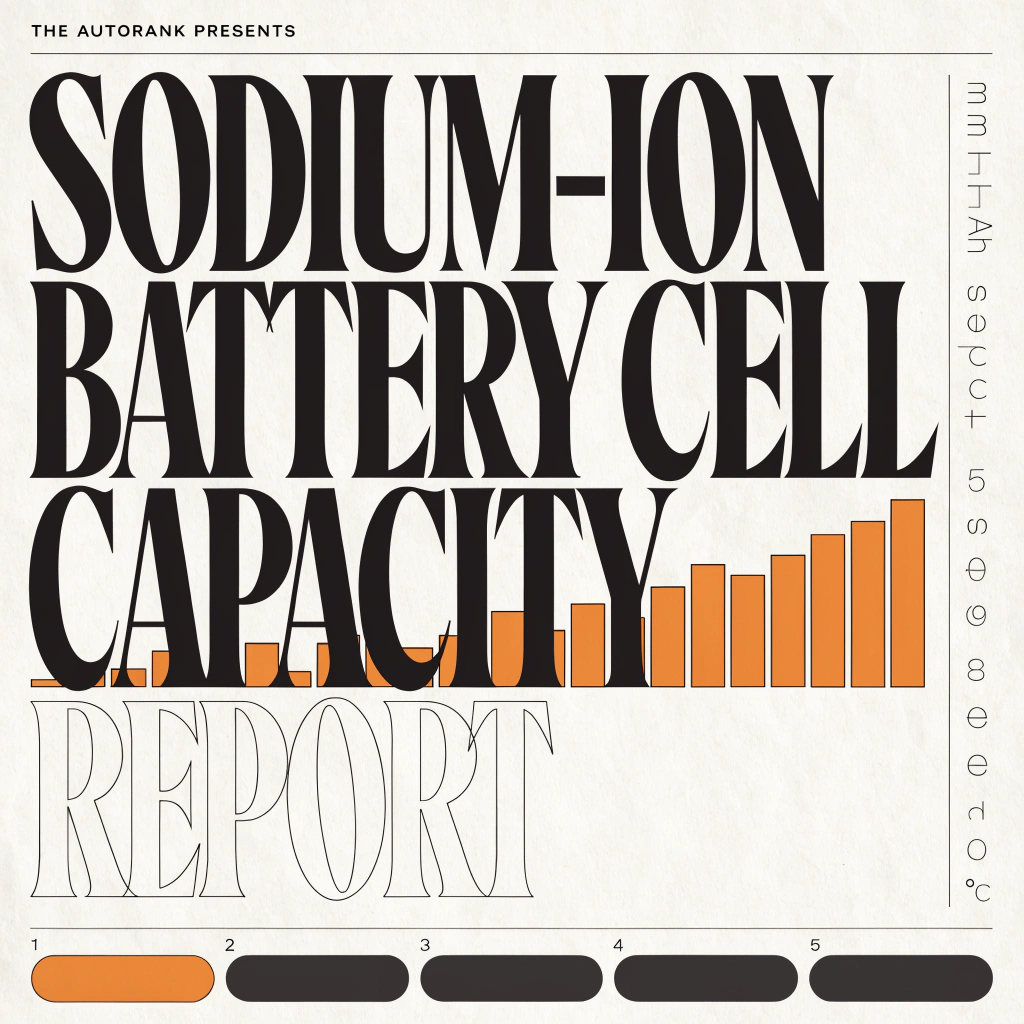
Sodium-Ion Battery Cell Capacity & Project Pipeline
The utility-scale vanguard is no longer speculative. A 4,790 MWh global project pipeline, with 1,400 MWh achieving grid interconnection imminently within H2 2026, heralds the technology’s ingress into the infrastructure firmament. China commands 47% of this deployment, yet Western entities—Natron Energy, Faradion, Tiamat—are carving discernible beachheads.
Description
The sodium-ion epoch crystallises in Q3 2026. A cumulative 60.3 GWh of active manufacturing capacity, anchored by CATL’s formidable 18 GWh Prussian White dominion, substantiates the technology’s emancipation from lithium’s geopolitical vicissitudes. The cost architecture reveals an irrefutable structural advantage: a precursor cost ratio of 160:1 favouring sodium, compounded by an aluminium dual-current-collector paradigm that obviates copper entirely, excising $6,400 per tonne from the bill of materials.
Persistent scaling turbidity remains, however. The industry average production yield languishes at 80.5%, with moisture incursion reigning as the preeminent manufacturing adversary. Only CATL and BYD have breached the 90% commercial viability Rubicon. The patent landscape mirrors this asymmetry: CATL’s 1,247 active sodium patents constitute an intellectual property citadel that Western challengers must circumnavigate. The strategic vector is unequivocal—sodium-ion is no longer a nascent promise but a maturing industrial artefact, its trajectory now governed by yield optimisation rather than fundamental scientific validation.
Related products
-
Green Hydrogen offtake Agreements, Price Benchmarks & Bankability Metrics
Read more -
Sodium-Ion Takeover: 2026-2030 Strategic Forecast Report
Read more -
Green Hydrogen Policy, Subsidy & Carbon Pricing Compliance Tracker
Read more -
Megawatt Charging Systems (MCS) & Fleet Depot Interconnections
Read more