
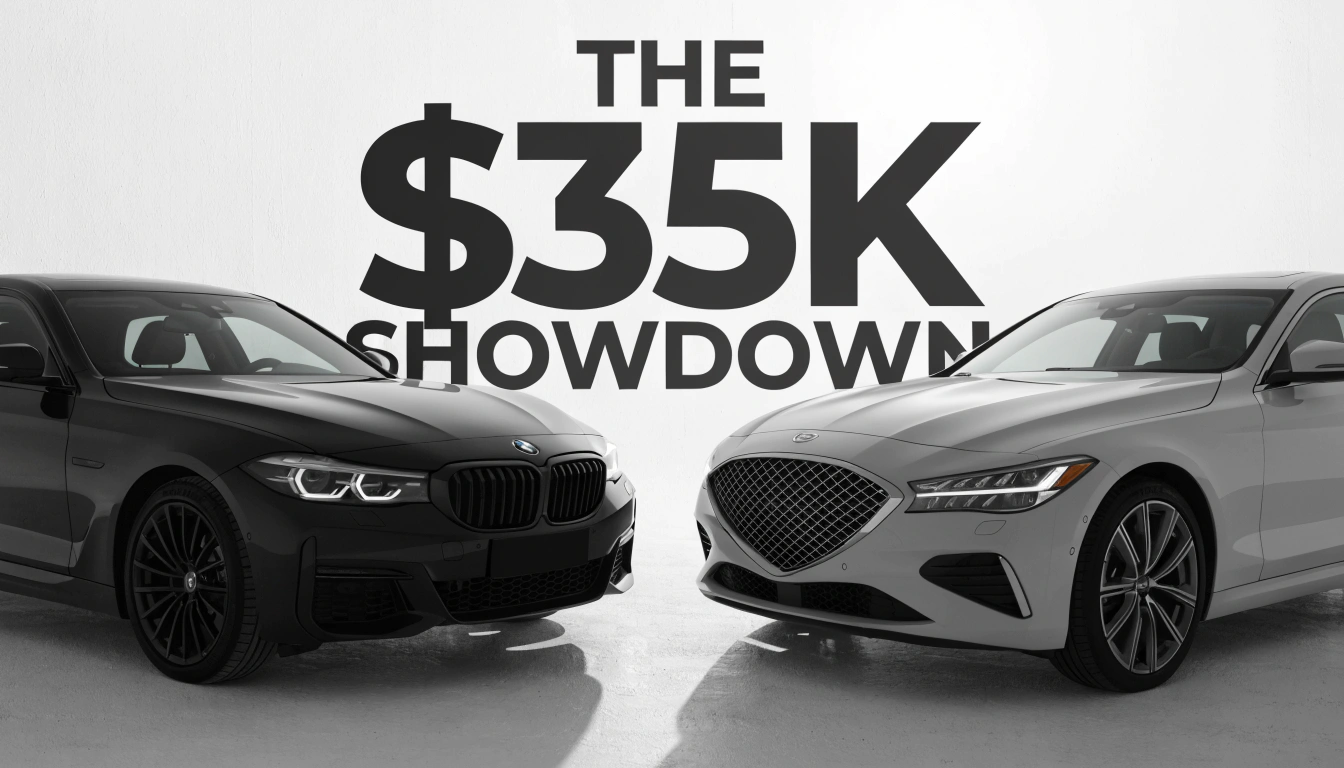
A. Introduction: Redefining Luxury Attainability
Welcome, discerning buyer. You stand at the precipice of a uniquely rewarding automotive decision: the acquisition of a luxury vehicle that delivers sophistication, performance, and advanced technology, all without the devastating depreciation of a new-car sticker. This guide is engineered for you—the informed individual who recognizes that true value lies not in the “new,” but in the “exceptional.”
Segment Definition: Our scope is the premium used luxury sedan and SUV market, focusing on models from the 2018-2022 model years, available with reasonable mileage (under 60,000 miles) for a target out-the-door price of $35,000 or less. This segment represents the “sweet spot” of modern automotive engineering, where cutting-edge infotainment, robust safety suites, and refined powertrains become accessible.
Guide Authority & Scope: This is not a listicle. It is a doctoral thesis in value procurement. We will dissect not just which cars to consider, but the complete ecosystem of ownership. We will analyze financial models, forecast long-term costs, and equip you with a forensic-level inspection protocol. Our goal is to transform you from a researcher into an expert, capable of negotiating a purchase with the confidence of a fleet manager.
Target Buyer Priorities: You are likely balancing:
- Emotional Appeal & Rational Judgment: The desire for prestige and driving pleasure, tempered by financial pragmatism.
- Feature Expectation: Demand for a premium sound system, leather upholstement, advanced driver aids, and a powerful, smooth engine is non-negotiable.
- Cost Awareness: Understanding that purchase price is merely an entry fee; true cost encompasses maintenance, insurance, and depreciation.
Let us begin the journey to your perfect luxury car.
B. Competitive Model Landscape: The Complete Contender List
Here is an unbiased assessment of every relevant model meeting our criteria. We evaluate pros, cons, ideal model years, and projected ownership costs.
1. 2019-2021 Genesis G80 (3.8L V6 or 3.3L Twin-Turbo V6)
- The Proposition: Perhaps the most intelligent buy in the segment. The G80 offers near-limitless standard equipment, a sublime interior, and a warranty that often carries over to second owners. It’s a car that prioritizes serene comfort and value over brand cachet.
- Pros: Legendary 10-year/100,000-mile powertrain warranty transferability; impeccable fit-and-finish; superbly quiet cabin; massive list of standard features; lower insurance costs than German rivals.
- Cons: Less engaging driving dynamics than sportier Europeans; Genesis brand lacks the traditional prestige of German marques; infotainment controller can feel dated.
- Model Year to Target: 2021. This refresh brought stunning new exterior styling, a significantly upgraded interior with a 14.5-inch touchscreen, and enhanced standard active safety features.
- Estimated 5-Year Maintenance & Repair Costs (from purchase): $5,200 – $6,500. Exceptional value, with lower parts and labor costs than German competitors. The robust warranty covers major powertrain concerns.
2. 2018-2020 Audi A6 (3.0T TFSI Premium Plus or Prestige)
- The Proposition: The technophile’s executive sedan. The A6’s cabin is a masterclass in minimalist, digital design, built around the brilliant dual-touchscreen MMI system. The supercharged 3.0L V6 is both potent and reliable.
- Pros: Benchmark interior design and technology; Quattro all-wheel-drive standard; perfectly balanced ride/handling mix; supremely confident in all weather.
- Cons: Out-of-warranty repairs can be expensive; complex tech interface has a learning curve; rear seat space is adequate but not class-leading.
- Model Year to Target: 2019. The first year of the C8 generation, offering the full tech overhaul. A 2019 with under 50k miles is a prime target within budget.
- Estimated 5-Year Maintenance & Repair Costs: $8,000 – $10,500. Higher than average. Requires disciplined adherence to maintenance schedules. Control arm and electronic issues can surface as mileage climbs.
3. 2017-2019 BMW 5 Series (530i or 540i)
- The Proposition: The ultimate driving machine for the real world. The G30-generation 5 Series is arguably the best all-around sports sedan ever made, blending sublime steering, a compliant ride, and unparalleled powertrain refinement.
- Pros: Best-in-class driving dynamics and steering feel; incredibly efficient and smooth powertrains (B48/B58 engines are reliable); spacious and elegant interior; iDrive 6.0 is intuitive.
- Cons: Optional equipment is critical—a base model feels hollow; maintenance is pricey; run-flat tires compromise ride quality unless swapped.
- Model Year to Target: 2018. Allows for initial depreciation hit while ensuring the latest tech and the reliable B58/B48 engine family. Look for Luxury or M Sport packages.
- Estimated 5-Year Maintenance & Repair Costs: $7,500 – $9,500. The B58 (540i) engine is robust, but peripheral components (cooling system, gaskets) will need attention. The 530i is slightly less costly to maintain.
4. 2018-2020 Mercedes-Benz E-Class (E 300 or E 450)
- The Proposition: Unrivaled aesthetic prestige and cabin ambiance. The W213 E-Class delivers a sense of occasion and comfort that is distinctly Mercedes. It feels the most “expensive” from the driver’s seat.
- Pros: Lavish, commanding interior with exquisite materials; best-in-class rear seat comfort; effortless, powerful powertrains; a true status symbol.
- Cons: Steering can feel numb and disconnected; complex INFOTAINMENT system; higher likelihood of expensive electronic gremlins post-warranty.
- Model Year to Target: 2019. Post-facelift models have updated tech and steering wheels. The E 450’s mild-hybrid V6 is a gem.
- Estimated 5-Year Maintenance & Repair Costs: $9,000 – $12,000. The highest in this group. Air suspension components (if equipped) are a four-figure replacement item. Electrical system diagnostics are costly.
5. 2018-2020 Lexus ES 350 / ES 300h
- The Proposition: The unassailable bastion of reliability and comfort. The ES is a front-wheel-drive, comfort-oriented cruiser that will likely outlive its owner with minimal fuss. It’s the antithesis of automotive drama.
- Pros: Legendary Toyota-derived reliability; ultra-smooth and quiet ride; exceptional fuel economy (especially the 300h hybrid); staggeringly low cost of ownership.
- Cons: Driving experience is bland and uninvolving; infotainment is frustrating (trackpad controller); lacks all-wheel-drive; conservative styling.
- Model Year to Target: 2019. The first year of the transformative new generation, with sharper styling, a new platform, and Apple CarPlay (finally).
- Estimated 5-Year Maintenance & Repair Costs: $4,000 – $5,500. The clear winner for predictable, low-cost ownership. Hybrid battery warranty often extends to 10 years/150,000 miles.
6. 2017-2019 Volvo S90 (T5 or T6 Inscription)
- The Proposition: Scandinavian sanctuary and design leadership. The S90 is arguably the most beautiful sedan in its class, with a cabin that prioritizes airy, minimalist serenity and exceptional seats.
- Pros: Stunning, distinctive interior and exterior design; supremely comfortable and supportive seats; excellent standard safety technology; potent and efficient turbo/supercharged T6 engine.
- Cons: Driving dynamics are soft and not sporty; infotainment system (Sensus) can be laggy; long-term reliability of complex powertrain is a question mark.
- Model Year to Target: 2018. Look for Inscription trim for the full luxury experience. CPO (Certified Pre-Owned) is highly recommended for extended warranty coverage.
- Estimated 5-Year Maintenance & Repair Costs: $7,000 – $9,000. Higher than industry average. Complex engine architecture and proprietary electronics can lead to expensive specialist repairs.
(Note: Luxury SUVs like the Audi Q5, BMW X3, Lexus RX, and Acura MDX are also prolific in this price range. The analytical frameworks in Sections C & D apply identically to them.)
C. Core Decision-Making Framework: The Strategic Calculus
The Trinity: Performance vs. Comfort vs. Utility
Luxury cars are exercises in prioritized compromise.
- Performance-First (BMW 540i, Audi S5): You prioritize steering feedback, powertrain response, and chassis communication. You accept firmer ride quality and higher operating costs.
- Comfort-First (Lexus ES, Genesis G80, Mercedes E-Class): You prioritize cabin quietness, ride suppleness, and intuitive ease-of-use. You accept less driver engagement and, in some cases, front-wheel-drive dynamics.
- Utility-First (Volvo S90/V90, Audi A6 Allroad): You prioritize cargo space, all-weather capability, and distinctive design. You accept potentially higher complexity and a focus on practicality over sportiness.
The New vs. Used Financial Model: A $35,000 Case Study
| Consideration | New Luxury Car (~$55,000 MSRP) | Used Luxury Car (~$35,000 Purchase) |
|---|---|---|
| Initial Outlay | $55,000 + TTL | $35,000 + TTL |
| Year 1 Depreciation | ~$11,000 (20%) | ~$3,500 (10%) |
| Warranty Coverage | Full 4yr/50k bumper-to-bumper | Likely expired or short remaining; CPO extends |
| Feature Level | Latest, but often option-dependent | 90% of features for 60% of the cost |
| 5-Year Total Cost* | ~$70,000 | ~$48,000 |
| Financial Impact | Significant capital loss | Preserved capital; smarter asset allocation |
Assumes financing, insurance, maintenance, and fuel. The used car saves ~$22,000.
Total Cost of Ownership (TCO) 5-Year Projection Chart
(Model | Depreciation | Fuel/Energy | Maint/Repair | Insurance | Estimated Total)
- Genesis G80: $12,500 | $9,000 | $6,000 | $6,500 | $34,000
- Lexus ES 350: $11,000 | $10,500 | $5,000 | $6,000 | $32,500
- BMW 530i: $14,000 | $8,500 | $7,500 | $7,500 | $37,500
- Audi A6 3.0T: $15,000 | $10,000 | $9,000 | $7,000 | $41,000
- Mercedes E 450: $16,000 | $11,000 | $10,500 | $7,500 | $45,000
Financing & Insurance Considerations
- Financing: Used car loan rates are typically 1-2% higher than new. In 2026, expect 5.5% – 7.5% APR for well-qualified buyers on a 60-month loan. Get pre-approved from a credit union before shopping.
- Leasing Used: “Lease-to-own” or third-party leases on used cars are complex and often poor value. Avoid.
- Insurance: Call for quotes BEFORE falling in love. German performance models (BMW M, Audi S) command premiums 25-50% higher than a Lexus or Genesis. Your driving record and location are the largest factors.
D. The Transaction & Acquisition Process: From Search to Signature
1. The 21-Point Pre-Purchase Inspection Protocol
Do not skip this. A $200 inspection can save $5,000.
Exterior & Structure:
- Paint & Body: Check for color mismatch, orange peel texture, or overspray on trim (signs of repair).
- Panel Gaps: Doors, hood, trunk. Consistent, even gaps indicate no major collision.
- Glass: All windows should have matching manufacturer logos (dated replaced glass).
- Undercarriage: Look for rust, fluid leaks, or damaged components.
Interior & Operation:
- Odor: Musty smell indicates water leaks. “New car” spray may hide smoke.
- All Electronics: Test every switch, seat motor, window, sunroof, and door lock.
- Infotainment: Pair your phone, test all speakers, check for screen delamination.
- Seats & Steering: Check for excessive, uneven wear inconsistent with odometer.
Mechanical & Test Drive:
- Cold Start: Listen for unusual ticks, rattles, or white/blue exhaust smoke.
- Transmission: Should shift smoothly, without harsh engagements or “clunks.”
- Suspension: Drive over bumps—listen for knocks (worn bushings/struts). No drifting.
- Brakes: Smooth, vibration-free application. Listen for grinding or high-pitched squeals.
- Steering: Should be tight at center. No vibrating or pulling.
Documentation & History:
- VIN Report: Run an independent report (CarFax/AutoCheck). Look for clean title, consistent odometer readings, and service records.
- Service Records: Ideal car has a dealership or specialist paper/digital trail.
- Recall Status: Check NHTSA website. All recalls should be completed.
- Ownership History: Fewer owners is better. 1-2 owners ideal.
Professional Inspection (MANDATORY):
- Choose the Right Shop: A specialist for the brand (e.g., German independent, Lexus specialist).
- Provide the Checklist: Give them this list.
- Review the Report: They should provide quotes for all needed repairs.
- Use for Negotiation: Every item is a bargaining chip to lower price or demand pre-purchase repair.
Finalizing the Purchase:
- Documentation Checklist: Title (clean), bill of sale, odometer disclosure, lien release (if applicable), vehicle history report, inspection report, warranty paperwork (if CPO).
- Final Walkthrough: Conduct with the seller present. Verify all agreed-upon repairs are completed. Confirm all keys/fobs, manuals, and tools are present.
- Payment: Use a certified bank check or escrow service. Never cash.
E. Conclusion & Final Recommendations
THE AUTORANK TOP 3 PICKS
1. FIRST PLACE: 2019-2021 Genesis G80
- Justification: It wins on the objective merits. It delivers 95% of the Mercedes E-Class’s comfort and luxury, 90% of the BMW’s technology, and wraps it in a compelling warranty with a dramatically lower cost of ownership. For the smart luxury buyer, it is the unimpeachable value champion. You pay for the car, not the badge.
2. SECOND PLACE: 2018-2019 BMW 5 Series (530i/540i)
- Justification: It wins on subjective driving excellence. If your priority is the connection between car and driver, nothing else in this price range comes close. The B58 engine is a modern masterpiece. It requires a more attentive owner than the Genesis, but rewards with unparalleled dynamic satisfaction.
3. THIRD PLACE: 2019 Lexus ES 350 / ES 300h
- Justification: It wins on peace of mind. If your priority is to buy the car, follow the basic maintenance schedule, and think nothing of it for 100,000 miles, this is your choice. It is a supremely comfortable appliance that coddles you in silence and reliability. It asks nothing of you but gasoline.
A Final Word of Empowerment
The search for a used luxury car is a journey of self-discovery. Do you crave the serene, faultless isolation of a Lexus? The tactile, connected thrill of a BMW? The tech-forward, balanced confidence of an Audi? The unabashed, value-packed grandeur of a Genesis?
There is no wrong answer here—only the answer that is right for you. Each vehicle profiled here is, in its own right, an excellent machine that represents a significant achievement in automotive design. Use the data in this guide to narrow the field, employ the inspection protocol to separate the gems from the nightmares, and let your final test drive be the deciding vote.
You are not buying someone else’s problem. You are smartly acquiring a depreciated asset that still delivers immense pleasure, capability, and pride. Go forth, negotiate with confidence, and enjoy every mile in your new, exceptional automobile. The road awaits.