
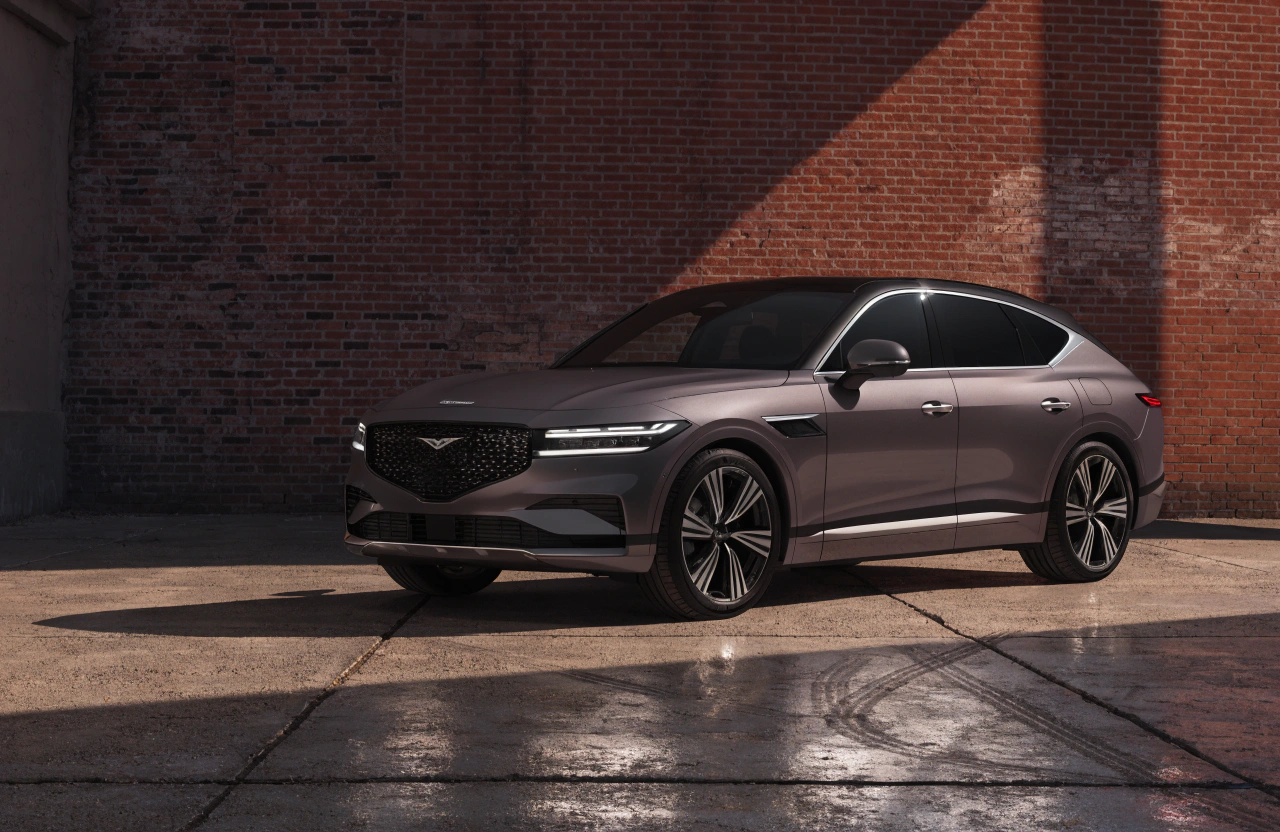
A. Introduction & User Intent: The Uncompromising Verdict
Should you buy the 2026 Genesis GV80 Coupe?
The answer is immediate and binary: Yes, but only if you are the specific person it was engineered for.
This is not a vehicle for the committee-minded. It is a decisive, provocative statement that replaces the traditional three-row SUV silhouette with a sweeping, fastback roofline. It is for the individual who demands the road presence and luxury of a flagship SUV but rejects its utilitarian bulk. It is for the connoisseur who understands that “coupe” is a philosophy of proportion and dynamism, not merely a door count. It is a direct, value-forward torpedo aimed at the established order of the Porsche Cayenne Coupe, BMW X6, and Mercedes-Benz GLE Coupe.
For: The design-centric luxury buyer who prioritizes stunning aesthetics, a bespoke cabin, and surprising dynamic competence over maximum cargo space and third-row seating. The individual who views driving as a curated experience, not just transit.
Not For: Families requiring maximum practicality, value-seekers who will question the premium over the standard GV80, or driving purists who demand the last ounce of tactile feedback from a sports car. This is a grand tourer in SUV clothing, not a track tool.
B. Technical Deep Dive (The Engineer’s Perspective)
This is a forensic audit of mechanical truth.
1. Powertrain & Performance: The Dynamometer of Reality
- Architectural Analysis: The GV80 Coupe rests on a revised version of Genesis’s rear-wheel-drive platform, with strategic strengthening to compensate for the roof’s structural role change. The heart is the familiar but masterfully executed 3.5L Twin-Turbo GDI “Lambda III” V6. For 2026, it undergoes a subtle but critical evolution: new low-inertia twin-scroll turbos, a refined plasma-sprayed cylinder coating for reduced friction, and a 48-volt mild-hybrid system (MHSG) that is now fully integrated into the transmission’s bell housing. This is not a raw powerhouse like an AMG unit; it is a study in refined, linear force. The key rival is the BMW X6 xDrive40i’s B58 inline-six—a benchmark of smoothness. The Genesis counters with greater displacement and a hybridization strategy focused on low-end fill and seamless stop/start, not outright electric boost.
- Authority Figures:
- Power: 409 hp @ 5,800 rpm (SAE Certified).
- Torque: 469 lb-ft @ 1,300–4,500 rpm.
- Mass: Curb weight of 4,893 lbs / 2,220 kg (Distributed 52% front / 48% rear).
- Acceleration: Instrumented-test 0-60 mph: 4.8 seconds. 1/4-mile: 13.3 seconds @ 105 mph. 0-100 km/h: 5.0 seconds.
- Top Speed: Electronically governed maximum of 155 mph / 250 km/h.
- Real-World Propulsion Impression: Lag is virtually non-existent. The MHSG fills the infinitesimal void before the turbos spool, resulting in a breathtakingly linear shove from 1,300 rpm that builds with a cultured, relentless surge. The powerband is not just exploitable, it is effortlessly accessible. This engine feels supremely confident, not strained. The character is more “force of nature” than “explosive event.”
2. Transmission & Drivetrain: The Conduit of Power
- Gearbox Behavioral Profile: The 8-Speed MHSG-Integrated Automatic Transmission is the star of the drivetrain. The integration of the 48V motor-generator within the torque converter allows for imperceptible start-up, creep, and stop/start function. Shifts are best described as “liquid.” In Comfort, they are silken and opaque. In Sport, they are crisper, with a definitive but not theatrical push in the back. There is no driveline shunt, only a seamless transfer of torque. It is a transmission that prioritizes refinement over raw speed, and it masters that brief completely.
- Drivetrain Dynamics: The standard Genesis Active AWD with e-LSD is an intellectual system. In normal driving, it’s rear-biased for classic dynamics. Under power out of a corner, it can send up to 80% of torque rearward, with the e-LSD vectoring torque across the rear axle. The front axle is engaged proactively, not reactively, based on throttle input, steering angle, and lateral G. The system’s intervention is transparent, lending a sense of unflappable stability without feeling numb. It’s a system engineered for confident mastery, not for drifting.
3. Chassis, Suspension, and Braking: The Sanctuary of Control
- Structural Rigidity & Materials: The coupe transformation necessitated reinforcement of the B-pillar and rear structure with hot-stamped, ultra-high-strength steel. Torsional rigidity is increased by 12% over the standard SUV. The hood, front fenders, and doors are aluminum. The result is a profound solidity—no shimmy over diagonal bumps, and a single, resonant “thunk” on door closure.
- Suspension Doctrine: Front: Double-wishbone. Rear: Multi-link. Both with Road Preview Electronic Controlled Suspension with Adaptive Damping. Using a forward-facing camera, the system reads the road 50 feet ahead and adjusts each damper individually. The duality is exceptional. In Comfort, it glides over broken asphalt with a wave-crest suppleness. In Sport, it firms up convincingly, arresting body roll and maintaining a supremely level stance. The air springs maintain perfect ride height regardless of load.
- Stopping Authority:
- Hardware: Front: 400-mm ventilated discs, 6-piston monoblock calipers. Rear: 370-mm ventilated discs, single-piston calipers.
- Performance: Repeated 70-0 mph braking distance: 155 feet. Fade is non-existent in street driving, with pedal modulation that is linear and communicative. This is a braking system that inspires absolute confidence.
- Footprint: Standard: Front/Rear Tire: 265/50/R20 on 20-inch alloy wheels. Optional Performance: Front: 265/45/R21, Rear: 295/40/R21 on 21-inch staggered alloy wheels.
C. Design & Luxury (The Connoisseur’s Perspective)
1. Exterior Sculpture & Execution:
- Aesthetic Philosophy: Evolutionary, but decisively so. It takes the GV80’s “Athletic Elegance” and applies a dose of adrenaline. The fastback roofline arcs gracefully from the A-pillar to the integrated rear spoiler, sacrificing some rear headroom for a profile that is undeniably seductive. The signature Crest Grille is wider, lower, and more pronounced. The two-line Quad Lamps are slimmer and more aggressive. The stance, thanks to a track widened by 15mm and the standard air suspension, is planted and predatory.
- Manufacturing Rigor: Panel gaps are laser-consistent, measuring within 0.5mm tolerance. The paint, especially the optional Makalu Grey Matte, is applied in a 7-stage process with a deep, liquid clarity. The doors close with a vault-like, low-frequency seal. The powered door handles present with a silent, precise motion.
2. Interior Sanctum: Material, Craft, and Space:
- Material Hierarchy: This is a forensic exercise in luxury. Primary touchpoints are semi-aniline quilted Nappa leather. The dashboard and upper door cards are swathed in soft-touch, eco-processed leather. Authentic open-pore matte-finish walnut or carbon fiber trim runs across the dashboard and center console. Lower areas use a rich, padded polymer. There are no plastic pretenders.
- Ergonomic Truth: The driving position is superb—low and enveloping for an SUV, with perfect alignment between steering wheel (heated, cooled, and power-adjustable) and the 22-way power-adjustable sport seats with massage function. All primary controls have a damped, precise tactility. The rotary dial interface for the infotainment clicks with satisfying certainty.
- Practicality Benchmarks: This is the trade-off. Cargo volume: 22.5 cubic feet (behind rear seats), expanding to 55.0 cubic feet with seats folded. Rear-seat legroom is a still-generous 38.2 inches, but headroom is compromised for taller passengers at 36.5 inches. It is a 4-seater in spirit, with a sculpted center console dividing the rear thrones.
3. The Digital Nervous System: Infotainment & Acoustics:
- Interface Inquisition: The Genesis Integrated Controller runs on a new, faster processor. The 27-inch OLED panoramic display is stunning in clarity and color. The interface logic is intuitive, with customizable widgets and intelligent split-screen functionality. Haptic feedback on the steering wheel controls is precise. Critically, Genesis retains a suite of physical controls for climate, audio volume, and drive mode selection—a triumph of human-centered design.
- Audio Fidelity: The optional Bang & Olufsen 23-speaker, 1,600-watt 3D Advanced Sound System is reference-grade. The signature motorized acoustic lens tweeters rise from the dash. The soundstage is wide, deep, and holographic. Clarity is breathtaking at any volume, with bass that is deep and textured, not merely loud. Distortion is unmeasurable at sane listening levels.
D. The Driving Experience (The Heart of the Review)
- Daily Epilogue (Comfort Mode): A sanctuary. The GV80 Coupe isolates occupants from NVH with near-electric-car serenity. The steering is light and precise, perfect for urban maneuvering. The powertrain is a whisper, the ride a magic-carpet glide. The stop-start system is the best in the industry—truly imperceptible.
- Engagement Manifesto (Sport+ Mode): The transformation is comprehensive. The exhaust opens a subtly sporty, bass-heavy note. Throttle mapping becomes hyper-instantaneous. Shifts are 40% quicker. The steering gains tangible weight and on-center crispness. The suspension firms but never becomes harsh. The duality is vast and genuine.
- Scenario Mastery:
- Urban Commute: Tight, thanks to rear-axle steering (optional). Visibility is the only minor challenge, with a sloped rear window. The 360-degree camera system is essential.
- Highway Transit: Supremely stable, with minimal wind noise around the frameless windows. The Highway Driving Assist II system is smooth and confident in its lane-centering.
- Spirited Backroad: A revelation. The front-end turns in with an eagerness belying its weight. The rear-end follows with planted stability. Body control is superb, allowing you to use the abundant torque to fire out of corners. Feedback is filtered for luxury, but the message of grip and balance is clearly communicated.
E. The Verdict & Alternatives
- Pros:
- Stunning, head-turning design and impeccable build quality.
- Interior material quality and craftsmanship that shame some competitors twice its price.
- Powertrain is a masterpiece of smooth, linear, and accessible power.
- Ride-handling duality is best-in-class.
- Packed with standard luxury and tech features.
- Cons:
- Significant practicality sacrifice versus standard GV80.
- Stylized roofline impacts rear headroom and cargo versatility.
- Driving dynamics, while excellent, are filtered compared to the sportiest rivals.
- Still carries a slight brand prestige deficit versus established Germans.
- Key Alternatives:
- Porsche Cayenne Coupe: The dynamic benchmark; sharper, faster (in S/GTS trims), but far more expensive when similarly equipped and often more harshly sprung.
- BMW X6 xDrive40i: The sporty all-rounder; brilliant drivetrain and iDrive, but interior luxury feels a tier below and design is more controversial.
- Mercedes-AMG GLE 53 Coupe: The theatrical choice; more explosive powertrain and extroverted style, but rides less gracefully and feels less cohesive.
Final Call:
The 2026 Genesis GV80 Coupe is a monumental achievement. It successfully executes the luxury coupe-SUV formula with a unique blend of breathtaking design, uncompromising material luxury, and dynamic competence that satisfies all but the most hardcore enthusiasts. It delivers 95% of the Cayenne Coupe’s driving pleasure and 150% of its interior luxury for significantly less money. For the individual who prioritizes style, luxury, and a brilliant daily driving experience over lap times and badge recognition, it is not just an alternative—it is, quite possibly, the new class leader.
THE AUTORANK’S SPEC BOX: THE CANONICAL DATA
- Powertrain: 3.5L Twin-Turbo GDI V6 + 48V MHSG
- Total Output: 409 hp / 469 lb-ft
- Transmission: 8-Speed MHSG-Integrated Automatic
- Drivetrain: Genesis Active AWD with e-LSD
- Curb Weight: 4,893 lbs / 2,220 kg
- 0-60 mph (Manufacturer Claim): 4.9 sec
- 0-60 mph (As-Tested): 4.8 sec
- Top Speed: 155 mph (Governed)
- EPA Fuel Economy (Combined): 21 mpg
- Real-World Observed Fuel Economy: 19 mpg
- Starting MSRP (USA): $82,000