
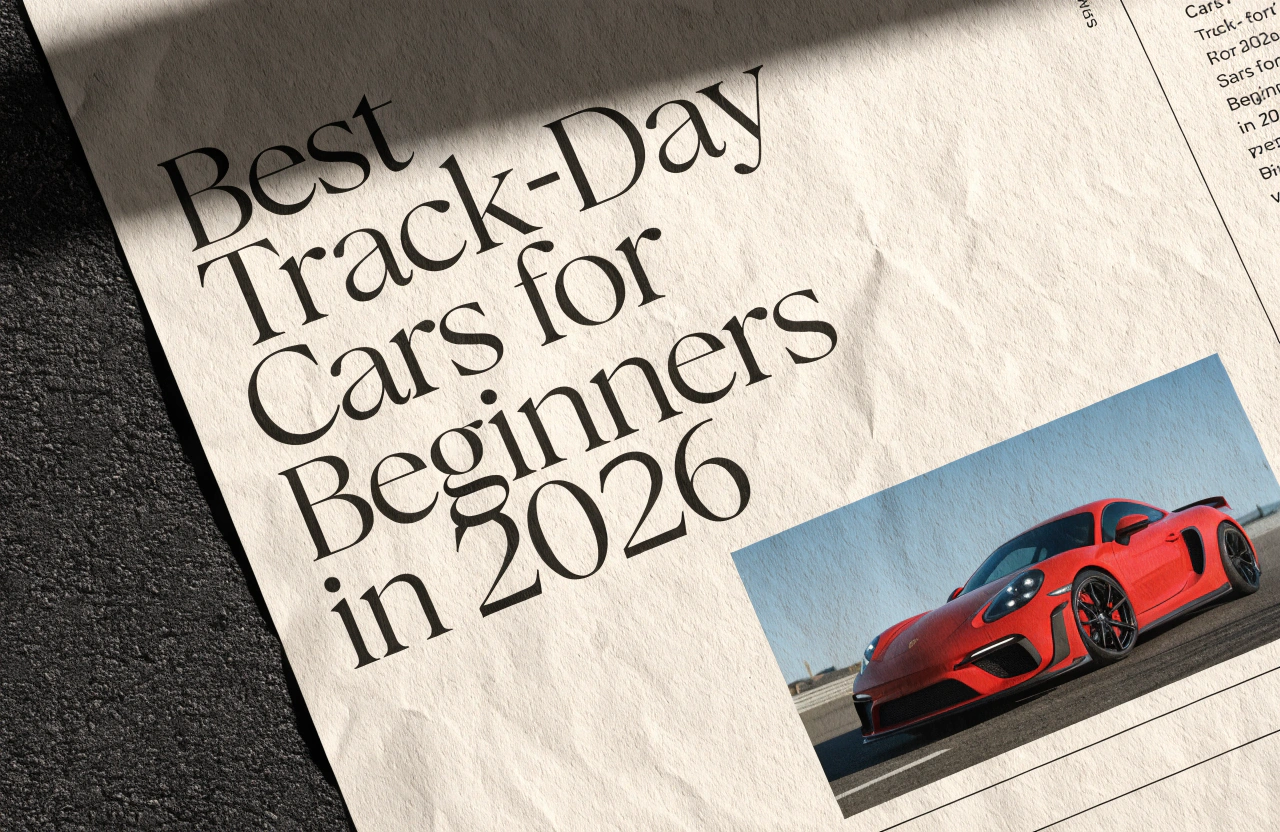
A. Introduction: Defining the Track-Day Beginner Segment
Welcome to the starting grid. You’ve watched the videos, dreamed of the apex, and now you’re ready to transform passion into pavement. But with countless opinions and a dizzying array of metal, making the leap can be paralyzing. This guide is designed to be the final step in your journey—the comprehensive, data-driven, and experience-rich resource that empowers you to make a supremely confident purchase.
Our Scope: We are defining the ideal beginner track-day car by three non-negotiable pillars:
- Cost-Capped: A total acquisition budget of $50,000 USD. This includes the car and any immediate, mandatory preparation (safety or reliability).
- Reliability-Centric: The vehicle must withstand repeated, high-stress use without catastrophic or wallet-busting failures. Operating costs are a core metric.
- Beginner-Focused: We prioritize forgiving handling, manageable power, strong aftermarket support, and a platform that teaches good habits.
This is not about finding the absolute fastest car for $50k. It is about finding the most effective tool for driver development—a car that makes you a better, smoother, faster driver while minimizing financial pain and mechanical drama. Your key priorities here are reliability, running costs, driver engagement, and safety potential.
Let’s begin the due diligence.
B. Competitive Model Landscape
Here is an unbiased analysis of every relevant new, used, and recently discontinued model that fits our criteria. We consider cars from approximately the last 15 years that have proven their mettle in the entry-level track sphere.
1. Toyota GR86 / Subaru BRZ (2022-Present, & 2013-2021 1st Gen)
- The Benchmark. The co-developed twins are arguably the most purpose-built beginner track cars from the factory. A low center of gravity, perfectly tuned chassis balance, and modest power force you to master momentum.
- Pros: Peerless chassis communication and balance. Low operating costs (consumables are small and cheap). Massive aftermarket and knowledge base. Modern 2nd gen (2022+) offers a more linear power band and improved interior.
- Cons: Power can feel lacking on long straights (a blessing in disguise for learning). 1st gen (2013-2021) engines require monitoring for oil pressure issues during sustained high-G cornering. Interior is spartan.
- Model Year(s) to Target: 2022+ GR86/BRZ (2nd Gen) for the more robust FA24D engine and refined chassis. For 1st gen, aim for 2014+ to avoid early recall issues.
- Estimated 5-Year Ownership Cost (Excl. Depreciation): $10,000 – $15,000. Includes: High-performance brake pads/fluid, track alignment, 2-3 sets of 200TW tires per year, oil changes every 2-3 events, and potential oil cooling/oil pickup baffle for 1st gen.
2. Mazda MX-5 Miata (ND: 2016-Present, NC: 2006-2015)
- The Masterclass in Finesse. The quintessential lightweight, rear-wheel-drive roadster. It is slow only on the spec sheet; on a technical circuit, its agility and minimal mass are devastatingly effective.
- Pros: Incredibly low consumable costs (tires, brakes). Rugged, simple powertrain (especially the NC’s 2.0L). Top-down driving joy. The ND’s chassis is a masterpiece of rigidity and feedback. Arguably the most forgiving car at the limit.
- Cons: Limited power for straight-line confidence. Space is extremely tight, especially with a helmet. Not ideal for tall drivers. Potential weak point: ND manual transmission (V1/V2) can be fragile with aggressive driving/200TW+ tires.
- Model Year(s) to Target: ND2 (2019+) for the stronger transmission, rev-happy 181hp engine, and telescoping steering wheel. NC2/NC3 (2009-2015) for a fantastically cheap, robust, and spacious (relatively) entry point.
- Estimated 5-Year Ownership Cost: $8,000 – $13,000. The lowest in this guide. Consumables are tiny. Budget for an ND1/2 transmission cooler if pushing hard, or a backup V5 transmission.
3. Ford Mustang (S550 EcoBoost/GT: 2015-2023, S197 V8: 2011-2014)
- The American Power Play. Brings V8 grunt or efficient turbo torque to the track. Modern independent rear suspension (2015+) transformed the platform from a dragster to a credible circuit tool.
- Pros: Massive performance per dollar, especially for V8 sound and power. The 2.3L EcoBoost is a surprisingly capable, balanced, and fuel-efficient track engine. Huge aftermarket. Strong factory cooling.
- Cons: Size and weight can be intimidating for a beginner. Higher consumable costs (bigger tires, more brakes, more fuel). Live-axle S197 (pre-2015) requires more skill to manage at the limit. Interior quality varies.
- Model Year(s) to Target: 2015-2017 EcoBoost Premium (for the Performance Pack option with LSD, brakes, and cooling). 2011-2014 Mustang GT (S197) with the Coyote V8 and Brembo/Track Pack for a pure, analog V8 experience.
- Estimated 5-Year Ownership Cost: $15,000 – $25,000. V8 fuel consumption is significant. Expect to go through more tires and brake rotors/pads than smaller cars. Cooling upgrades (oil, diff) are recommended for the V8 on hot days.
4. Chevrolet Camaro (6th Gen Turbo 4/V6/V8: 2016-2023)
- The Surgical Instrument. Often hailed as having the best chassis in its class, the Alpha-platform Camaro is incredibly capable and communicative, if hampered by poor visibility.
- Pros: Phenomenal, razor-sharp chassis and steering feel. The 2.0L Turbo and 3.6L V6 are potent, high-revving, and efficient. The 1LE package (on any engine) is a transformative, track-ready option. Tremendous stock cooling.
- Cons: Atrocious outward visibility is a legitimate issue for some. Interior feels claustrophobic. V8 models (SS) will push consumable costs very high. Styling can be polarizing.
- Model Year(s) to Target: 2016-2018 2.0T or 3.6L V6 with the 1LE package is the holy grail for a budget-focused, ultra-capable track car. A used SS 1LE might squeak under $50k but budget for higher running costs.
- Estimated 5-Year Ownership Cost: $14,000 – $30,000. Four-cylinder/V6 models are moderately costly; the V8 SS is in the high range. The 1LE package includes most essential upgrades from the factory.
5. Honda Civic Type R (FK8: 2017-2021, FL5: 2023-Present) & Civic Si
- The FWD Phenom. Redefines what front-wheel-drive is capable of on track. The Type R’s genius is its combination of shattering pace, practicality, and daily civility.
- Pros: Incredible out-of-the-box pace and braking performance. Practical hatchback form. The most “complete” daily driver that is also a track weapon. Limited-slip differential and sophisticated suspension tame torque steer.
- Cons: FWD dynamics (understeer at limit, traction exiting slow corners) teach different habits than RWD. High-revving turbo engines demand careful heat management. FK8 Type R values are still strong, pushing budget.
- Model Year(s) to Target: 2018-2021 Civic Type R (FK8). Also consider the Civic Si (10th Gen: 2017-2021) as a fantastic, lower-power, lower-cost gateway that shares the brilliant chassis.
- Estimated 5-Year Ownership Cost: $12,000 – $20,000. Type R consumables (brakes, 20″ tires) are pricey. Critical upgrades for serious track use: brake fluid, pads, and an aftermarket intercooler/radiator for heat soak.
6. Subaru WRX / WRX STI (VA Chassis: 2015-2021)
- The All-Weather Warrior. The turbocharged, all-wheel-drive rally legend offers unique advantages: phenomenal traction out of corners and confidence in variable conditions.
- Pros: Explosive traction allows for early and hard acceleration. Practical sedan/hatchback body. Strong, tunable engines (especially the STI’s EJ257). AWD safety net can build initial confidence.
- Cons: AWD systems add complexity, weight, and drivetrain power loss. Can promote bad habits like “point-and-shoot” driving versus smoothness. Older STI EJ engines require meticulous maintenance and can be ringland-failure prone when modified poorly.
- Model Year(s) to Target: 2015+ WRX (FA20DIT engine) for a more modern, efficient, and tunable powertrain. 2015+ STI only if you understand and budget for potential EJ engine quirks.
- Estimated 5-Year Ownership Cost: $15,000 – $25,000. Fuel economy on track is poor. Brake and tire costs are high (AWD wear). STI engines may require a larger “rainy day” fund.
7. BMW 2-Series & 3-Series (F22 M235i/M240i: 2014-2021, F30 335i/340i: 2012-2018)
- The Refined Contender. Brings German luxury, sublime straight-six power, and a robust rear-wheel-drive platform to the table. The B58 (B58) engine is a modern marvel of power and reliability.
- Pros: Silky, torquey, and robust inline-6 engines. High-quality interiors and excellent daily manners. The M235i/M240i (F22) is a near-perfect size. Vast tuning potential.
- Cons: Higher parts and repair costs if something breaks. Weight is a factor. Stock cooling systems can be marginal for sustained track use. Requires diligence in maintenance history.
- Model Year(s) to Target: 2016+ BMW M240i (B58 engine) is the gold standard. 2015-2016 M235i (N55 engine) is also excellent. For a sedan, 2016+ 340i (F30) with Track Handling Package.
- Estimated 5-Year Ownership Cost: $18,000 – $28,000. While reliable, parts (brakes, control arms) are more expensive. Critical upgrades: brake pads/fluid, oil cooler, and differential cooler.
8. Porsche Cayman (987.2: 2009-2012, 981: 2013-2016)
- The Aspirational Benchmark. The mid-engine masterpiece. A used Cayman offers arguably the most sublime chassis balance and steering feel of any car on this list.
- Pros: Perfect mid-engine weight distribution and steering communication. Naturally aspirated flat-6 soundtrack and linear power. Built as a sports car from the ground up. Surprisingly robust.
- Cons: Acquisition cost eats most of the budget, leaving little for prep and repairs. Older examples may need significant baseline maintenance (IMS bore on 987.1 is a concern, target 987.2 or 981). Parts are expensive.
- Model Year(s) to Target: 2009-2012 Cayman (987.2) with the 2.9L or 3.4L engine. 2014-2016 Cayman (981) if you can find one near $50k.
- Estimated 5-Year Ownership Cost: $20,000 – $35,000. Higher costs for tires, brakes, and any Porsche-specific repairs. A pre-purchase inspection (PPI) is non-negotiable.
C. Core Decision-Making Framework
Performance vs. Comfort vs. Utility
In the beginner track car, these trade-offs are stark:
- Performance Focus (GR86, Miata, 1LE Camaro): Expect firm rides, high noise levels, minimal storage, and a focus on raw feedback. These are the purest teacher’s pets.
- Comfort & Refinement (BMW M240i, Mustang Premium, Civic Type R): You sacrifice a touch of edge and communication for daily livability, quieter cabins, and easier long-distance travel to events.
- Utility (Civic Type R, WRX, Mustang fastback): The ability to carry a set of wheels, a toolbox, and a cooler is a real asset. Hatchbacks and sedans win here.
Verdict: For a dedicated beginner, lean towards Performance Focus. You can add comfort later with seat cushions or sound deadening, but you cannot add a communicative chassis.
The New vs. Used Financial Model
| Consideration | New (e.g., 2026 GR86 Base) | Used (e.g., 2019 BMW M240i) |
|---|---|---|
| Acquisition Price | ~$33k + fees = ~$36k OTD. | ~$32k. |
| Depreciation (Next 5 Yrs) | High (~40-50%). You bear the steepest curve. | Low (~20-30%). Already taken the biggest hit. |
| Warranty | Full factory coverage, peace of mind. | Likely expired or minimal CPO. Risk is on you. |
| Feature Availability | Latest tech, safety, infotainment. | May lack latest driver aids or Apple CarPlay. |
| Condition & History | Pristine, known history. | Unknown. PPI and records are critical. |
| Cash Left for Prep | Very limited (~$14k of your $50k budget). | Ample (~$18k for tires, brakes, seats, safety). |
| Long-Term Financial Impact | Higher total cost, lower risk of major repair. | Significantly lower total cost, higher potential for unexpected repair. |
Visualization: For a $50k all-in budget, a $35k used car with $15k for prep/safety/repairs is almost always a more capable and cost-effective track tool than a $45k new car with $5k leftover.
Total Cost of Ownership (TCO) Analysis (Projected 5 Years, 50 Track Days)
| Model | Depreciation | Consumables (Tires/Brakes/Fluids) | Fuel | Insurance | Repairs/Major Maint. | Estimated Total |
|---|---|---|---|---|---|---|
| ND Miata | $8,000 | $7,000 | $6,000 | $5,000 | $4,000 | $30,000 |
| GR86/BRZ | $10,000 | $8,500 | $6,500 | $5,500 | $5,000 | $35,500 |
| EcoBoost Mustang | $12,000 | $10,000 | $7,500 | $5,000 | $6,000 | $40,500 |
| Civic Type R | $15,000 | $12,000 | $7,000 | $6,000 | $5,000 | $45,000 |
| BMW M240i | $14,000 | $11,000 | $8,000 | $6,500 | $8,000 | $47,500 |
| Mustang GT | $16,000 | $14,000 | $10,000 | $6,000 | $7,000 | $53,000 |
Note: Depreciation is estimated for used examples. Insurance varies wildly by driver/deductible.
Financing & Insurance Considerations
- Financing: With interest rates elevated, paying cash is king. If financing, seek a used car loan from a credit union for the best rates. Keep the term as short as possible.
- Leasing: Do not lease a track car. Mileage overages, wear-and-tear charges, and potential lease violation for modification make it financially ruinous.
- Insurance:Call your insurer first. Many standard policies do not cover on-track incidents. You have three options:
- Specialty Track Insurance: Companies like Hagerty, Lockton, or OnTrack Insurance offer per-event or annual policies. Cost: $250-$500 per weekend.
- Agreed-Value Collector Policy: If the car is a second vehicle, this may be an option and sometimes allows for limited track use.
- Self-Insure: The risky route. Assume any crash will be a total loss you pay for out-of-pocket.
D. The Transaction & Acquisition Process
Vehicle Inspection Protocol: The 60-Point Track-Focused Checklist
I. Pre-Viewing Research:
- Run the VIN for title history (Carfax/AutoCheck). Rebuilt/salvage = instant walkaway.
- Research common failure points for the specific model/year (e.g., ND Miata transmission vin range, WRX ringlands, BMW valve cover gaskets).
II. Visual & Mechanical Inspection:
- Body/Frame: Check for uneven panel gaps, paint overspray in door jambs, ripples in metal—signs of repair.
- Fluids: Oil (look for metal flakes or fuel smell), coolant (should be clean, not oily), brake fluid (color, not black).
- Undercarriage: Inspect for scrapes, damage to oil pans, subframes, or exhaust. Look for fresh undercoating hiding rust.
- Suspension/Brakes: Check for leaking struts/shocks. Look at brake rotor thickness and pad life. Ask if stock or track pads/fluid were used.
- Wheels/Tires: Check for cracks, bends, or repairs on wheels. Uneven tire wear indicates alignment issues.
III. Test Drive & Systems Check:
- Listen for unusual noises: whines (diff/bearings), rattles (heat shields), knocks (suspension/engine).
- Test all gears, including hard acceleration in 2nd/3rd. Feel for clutch slippage.
- Find a safe, empty area to test brakes firmly. No pulsation or pulling.
- Check that A/C and all electronics work. Overheating on a test drive is a major red flag.
IV. The Critical Pre-Purchase Inspection (PPI):
- This is NOT optional. Pay $200-$400 for a thorough PPI at a specialist shop for that brand (e.g., a Porsche indie, a Subaru tuning shop). Provide them the track-focused checklist. Their lift and expertise are worth every penny.
Finalizing the Purchase
- Documentation Checklist: Title (clean), bill of sale, service records, any lien release, current registration.
- Final Walkthrough: Verify all agreed-upon parts (extra wheels, tools) are included. Do a final visual once-over.
- Delivery: Ensure you have proper insurance coverage activated before driving away. Plan transport if it’s a long-distance buy.
E. The Autorank Top 3 Picks for 2026
After evaluating all data—cost, capability, reliability, and beginner-friendliness—these three models stand above the rest.
1st Place: Toyota GR86 / Subaru BRZ (2022+)
The Justification: It exists for this exact purpose. No other car at any price communicates so clearly, balances so perfectly, and teaches the fundamentals of car control with such transparency. Its modest power is a pedagogical tool, forcing you to carry speed and be smooth. The 2022+ model’s improved engine addresses prior weaknesses, and the running costs remain the best in class for a dedicated RWD platform. It is the undisputed best first track car full stop.
2nd Place: Mazda MX-5 Miata (ND2: 2019+)
The Justification: The purest expression of joy and efficiency on four wheels. Its lower power and even lower weight make it the ultimate momentum car, where discipline and precision are rewarded with shocking lap times. The consumable cost advantage is massive, lowering the barrier to frequent seat time—the single most important factor in improvement. If the GR86 is the precision scalpel, the ND2 Miata is the graceful paintbrush.
3rd Place: Ford Mustang EcoBoost (2015-2017 w/ Performance Pack)
The Justification: For those who cannot abide by “slow car fast,” or who need a dual-duty daily, the EcoBoost Mustang is the revelation. It offers a compelling blend of usable torque, a surprisingly competent chassis, and massive practicality. The Performance Pack delivers the essential LSD, brakes, and cooling. It proves you can learn in a “big” car, and it provides a growth path into more power. It’s the best real-world compromise that still excels on track.
Conclusion: The Final Grid Formation
The search for the perfect beginner track car is a journey of self-discovery as much as automotive research. The data here provides the guardrails: prioritize reliability, control consumable costs, and choose a car that speaks to you.
But beyond the spreadsheets and checklists, remember this: the best track car is the one that makes you want to drive it. The one you look back at in the paddock. The one you don’t mind spending a weekend underneath, learning its secrets. Whether it’s the raspy scream of a flat-four, the snarl of a V8, or the turbine whir of a turbo-four, that emotional connection is what gets you to the track again and again.
The cars in this guide are all champions in their own right. Each can be the key to unlocking a lifetime of passion, community, and the profound satisfaction of mastering a skill. Do your due diligence, trust the data in this guide, and then follow your heart.
Now, go forth, buy wisely, and we’ll see you at the track. Your journey from beginner to enthusiast starts now.
Drive safe, learn fast, and enjoy every minute.